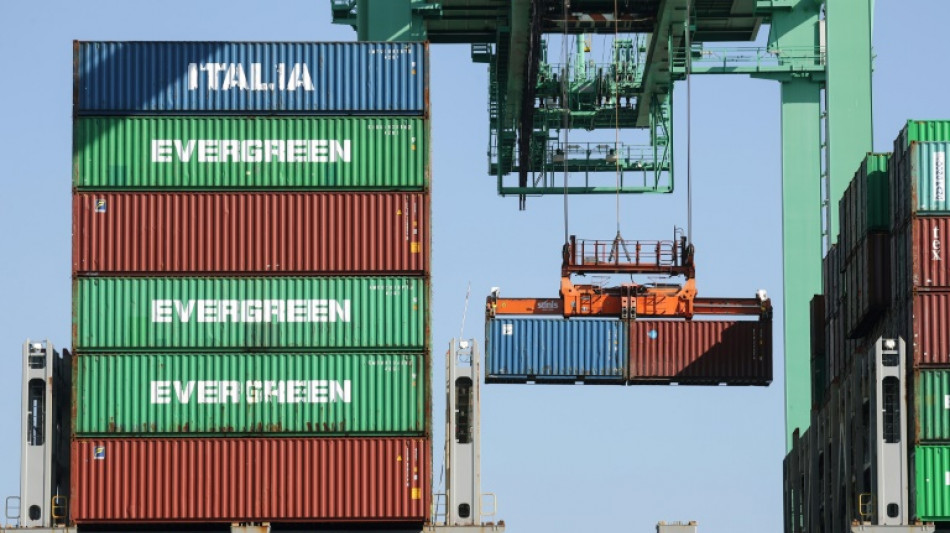
US trade deficit narrows unexpectedly in November / Photo: MARIO TAMA - GETTY IMAGES NORTH AMERICA/AFP/File

 Qatar media bodies discuss support for humanitarian initiatives

 Bezos grant helps Seattle nonprofit move thousands of families toward housing

 US stocks fall before midterm Election Day as technology shares weaken

 BLS Polymers makes strong market debut at ₹248 per share

 Petrol and diesel prices remain broadly steady across major Indian cities

 Derek Tierney Outlines Ten-Year Strategy for National Digital Health System

 BLS Polymers shares open 65.3% above IPO price

 ITC shares rise as analysts anticipate gradual cigarette-business recovery

 The Digital Burden: Why Instant Messaging Feels Like a Full-Time Job
The US trade gap narrowed in November as imports and exports both fell while higher interest rates bite, the government reported Tuesday.
Although analysts expected the trade deficit to widen slightly, the gap was smaller than anticipated at $63.2 billion, down from a revised October figure of $64.5 billion, the Commerce Department said.
Resilient consumption has supported US trade, but analysts have expected the effect of higher interest rates, as it weighs on demand, to add pressure on imports.
Meanwhile, exports could take a hit from slower growth in major US trading partners as well, on the back of monetary policy tightening.
In November, US exports slipped $4.8 billion to $253.7 billion while imports dropped more, by $6.1 billion, to $316.9 billion.
Behind the decrease in exports was a fall in goods including $3.6 billion less in industrial supplies and materials such as crude oil and nonmonetary gold.
Imports of goods also slipped, on the back of lower consumer goods imports such as those of cell phones and pharmaceutical preparations.
The US goods deficit with China slid $2.4 billion to $21.5 billion in November, said the report.
So far, the trade deficit has been on average wider in the fourth quarter compared with the third, said chief US economist Rubeela Farooqi of High Frequency Economics.
"The outlook for trade flows going forward is likely one of moderation, given the trajectory for demand and growth should slow, both domestically and abroad," she added.
L.Peeters--CPN