
-
 Kenya's economy faces climate change risks: World Bank
-
Streamex is making digital gold accessible

-
 Mixed US auto sales in Q2 amid high gas prices
-
US stocks retreat to open Q3 ahead of June jobs data
-
 'Gus' the T. rex presented in New York ahead of auction
-
Oppressive heat broils US during World Cup, July Fourth

-
 Mixed US auto sales in 2nd quarter amid high gas prices
-
Rufus the hawk patrolling Wimbledon tennis club

-
 Record heat broils US east coast amid World Cup, July Fourth events
-
US Fed chair says committed to combatting 'too high' prices
-
 Portugal braces for high temperatures in new heatwave
-
England breaks record for warmest June: Met Office
-
 Planned 1.7 million satellites 'devastating' for astronomy: study
-
Trump defends earning more than $1bn on crypto

-
 Canada to join Eurovision Song Contest
-
Swedish court orders Google pay $1.46 bn for favouring its price comparisons

-
 Chinese firm sells hyper-real, 'always loyal' humanoid robots
-
China imposes 'national security' rules on overseas investments
-
 Trump earned over $1 bn from crypto ventures in 2025
-
Indian sailors fear returning to Gulf after Middle East war
-
 The Afghan women farmers keeping their village alive
-
Fear and anger brew inside Meta amid AI frenzy
-
 After 250 years, the 'American dream' is tarnished but alive
-
World Bank to phase out lending to China by 2031
-
 No corn dogs? Trump's 'Great American State Fair' threatens to be a flop
-
Tepid outlook weighs on Nike despite tariff refund boost

-
 CIA boss compares cutting-edge AI to nuclear weapons
-
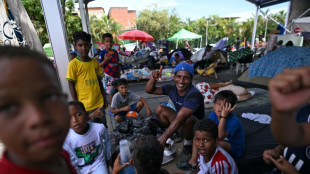
Football brings joy to Venezuelan kids displaced by quakes
-
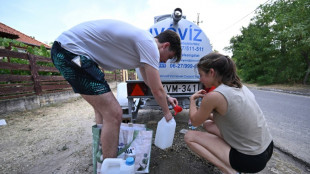 Taps run dry in Hungarian village as heatwave bites
-
German rail regulator backs Italian firm in competition spat
-
 Inflation slows in top eurozone economies as ECB ponders next move
-
Record number of 'new millionaires' in 2025, says UBS
-
 Data centres emitting more CO2 than thought: study
-
Ride-share group BlaBlaCar taps AI for 20-country expansion

-
 Thousands march to demand illegal migrants leave South Africa
-
MEXC Lists Ondo's Tokenized Strategy Preferred Stock on Spot Market

-
 Stocks climb, yen stays near 40-year low against dollar
-
Germany's labour market dilemma: rising unemployment despite vacancies
-
 Over 1 million migrants apply for Spain's mass regularisation: PM
-
New Oxford academic centre symbolises UK's big-donor era
-
 NASA robot mission aiming to rescue space telescope
-
Taiwan's ageing seaweed harvesters hope younger women wade in

-
 Affiliate of Pacific Avenue Capital Partners Completes Acquisition of ESE World from Amcor
-
HUNTING/HER Headhunter Talk with EnBW Board Member & CHRO Colette Rückert-Hennen

-
 Extreme heat warning issued for World Cup host Kansas City
-
World Bank drops climate finance targets in renewed action plan
-
 Tech rebound lifts Dow to record, yen hits 40-year low against dollar
-
US Supreme Court rules on dragnet searches of cellphone location data

-
 Europe's deadly heatwave scorches east, Slovakia hits record
-
Paris funeral homes overwhelmed after record heatwave

Sri Lanka faces 13-hour blackouts, hospitals stop surgery as crisis deepens
Sri Lanka announced nationwide 13-hour daily power cuts from Thursday and more hospitals suspended routine surgeries after running out of life-saving medicines, as the cash-strapped island's economic crisis deepened.
The South Asian nation of 22 million people is in its worst economic spiral since independence in 1948, sparked by an acute lack of foreign currency to pay for even the most essential imports.
The state electricity monopoly said it was extending Wednesday's 10-hour power cut by another three hours from Thursday, enforcing a 13-hour rolling nationwide blackout.
The country had been under severe electricity rationing since the start of the month and the monopoly said an earlier hike in power outage from seven hours to 10 hours was imposed because there was no oil to power thermal generators.
More than 40 percent of Sri Lanka's electricity is generated from hydropower, but most of the reservoirs were running dangerously low because there had been no rains, officials said.
Most electricity production is from coal and oil. Both are imported but in short supply, as the country does not have enough dollars to pay suppliers.
At least two more hospitals reported suspending routine surgeries because they were dangerously low on vital medical supplies, anaesthetics and chemicals to carry out diagnostic tests, and wanted to save them for emergency cases.
The country's biggest medical facility, the National Hospital of Sri Lanka in the capital said it had also stopped routine diagnostic tests.
An official added however that the facility continued to receive power supply from the national grid.
- Widespread protests -
Sri Lanka's main fuel retailer meanwhile said there would be no diesel, the fuel most commonly used for public transport, in the country for at least two days.
Local broadcasters reported widespread protests across the country demanding fuel for private vehicles, which are also used for public transport.
There were no reports of violence, but hundreds of motorists blocked main roads in several towns while dozens demonstrated outside the Central Bank of Sri Lanka in Colombo demanding the removal of governor Ajith Cabraal.
Officials from the state-owned Ceylon Petroleum Corporation urged queuing motorists to leave and return only after imported diesel is unloaded and distributed.
Fuel prices have also been repeatedly raised, with petrol costs nearly doubling and diesel up by 76 percent since the beginning of the year.
Colombo imposed a broad import ban in March 2020 to save foreign currency needed to service its $51 billion in foreign debt.
But this has led to widespread shortages of essential goods and sharp price rises.
The government has said it is seeking a bailout from the International Monetary Fund while asking for more loans from India and China.
Sri Lanka's current predicament was exacerbated by the Covid-19 pandemic, which torpedoed tourism and remittances.
Many economists also blame government mismanagement including tax cuts and years of budget deficits.
The country's statistics office on Wednesday announced economic growth of 3.7 percent for the 2021 calendar year, before the crisis began to bite -- up from a record contraction of 3.6 percent the previous year.
H.Müller--CPN