EU unveils 'sustainable' fashion push

 Kenya's economy faces climate change risks: World Bank

 Mixed US auto sales in Q2 amid high gas prices
 'Gus' the T. rex presented in New York ahead of auction

 Mixed US auto sales in 2nd quarter amid high gas prices

 Record heat broils US east coast amid World Cup, July Fourth events
 Portugal braces for high temperatures in new heatwave
 Planned 1.7 million satellites 'devastating' for astronomy: study
 Canada to join Eurovision Song Contest

 Chinese firm sells hyper-real, 'always loyal' humanoid robots
 Trump earned over $1 bn from crypto ventures in 2025

 The Afghan women farmers keeping their village alive
 After 250 years, the 'American dream' is tarnished but alive
 No corn dogs? Trump's 'Great American State Fair' threatens to be a flop

 CIA boss compares cutting-edge AI to nuclear weapons
 Taps run dry in Hungarian village as heatwave bites
 Inflation slows in top eurozone economies as ECB ponders next move
 Data centres emitting more CO2 than thought: study

 Thousands march to demand illegal migrants leave South Africa

 Stocks climb, yen stays near 40-year low against dollar
 Over 1 million migrants apply for Spain's mass regularisation: PM

 NASA robot mission aiming to rescue space telescope

 Affiliate of Pacific Avenue Capital Partners Completes Acquisition of ESE World from Amcor

 Extreme heat warning issued for World Cup host Kansas City

 Tech rebound lifts Dow to record, yen hits 40-year low against dollar
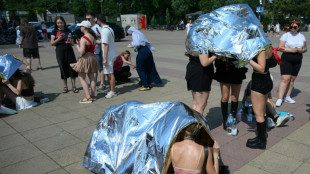 Europe's deadly heatwave scorches east, Slovakia hits record

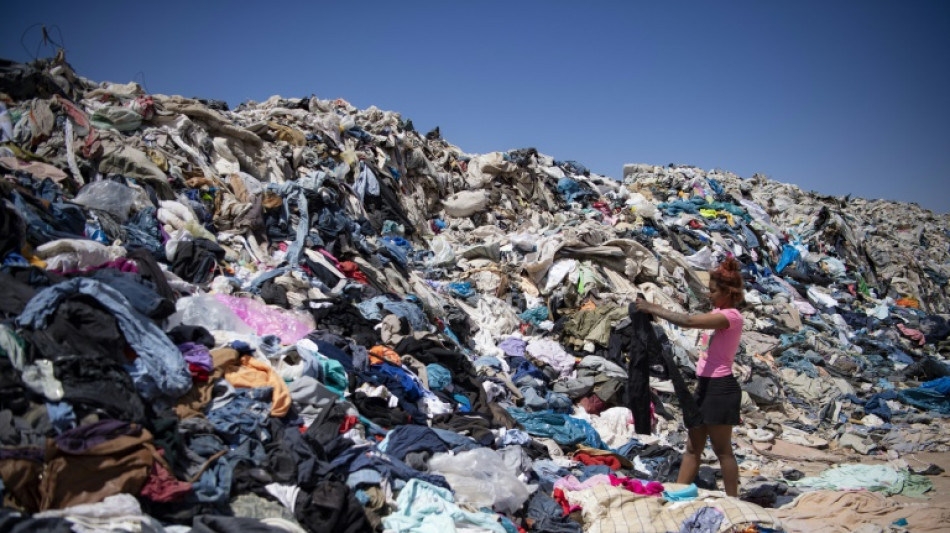
The EU on Wednesday announced proposals to crack down on "fast fashion" by making clothing easier to repair and more durable as part of a push to bolster environmental standards.
"It's time to end the model of 'take, make, break, and throw away' that is so harmful to our planet, our health and our economy," EU Commission Vice President Frans Timmermans said.
The plan, which will now be negotiated by EU member states and lawmakers, aims to ensure that by 2030 textiles sold in the EU will be made as much as possible from recycled fibres and cut down on the amount of hazardous microplastics they contain.
"Fast fashion should be out of fashion, and economically profitable re-use and repair services should be widely available," a statement said.
The proposal would introduce labelling on clothes detailing how easily recyclable and environmentally friendly they are.
It would also ban the destruction of unsold products "under certain conditions", including garments that had not been sold or were returned to shops.
The EU says that textiles have the "fourth highest impact on the environment and climate change" across its 27 nations after food, housing and transport.
The bloc estimates that Europeans buy 26 kilogrammes (57 pounds) of clothing and household linen, 73 percent of which is imported, and throw away some 11 kilogrammes of textiles, or 5.8 million tonnes in total.
Textile production has doubled worldwide between 2000 and 2015 but less than one percent gets recycled, and up to 35 percent of the microplastics released into the environment come from polyester or acrylic-based clothing.
The textile proposal was part of a broader "sustainable products initiative" to bolster existing rules aimed at making goods more energy efficient and recyclable.
The EU's executive says it intends to tighten its requirements on product design by imposing the use of more durable, resistant and recycled materials.
Goods would have to be easier to maintain and repair, with concrete steps envisioned including facilitating the replacement smartphone batteries.
A.Samuel--CPN