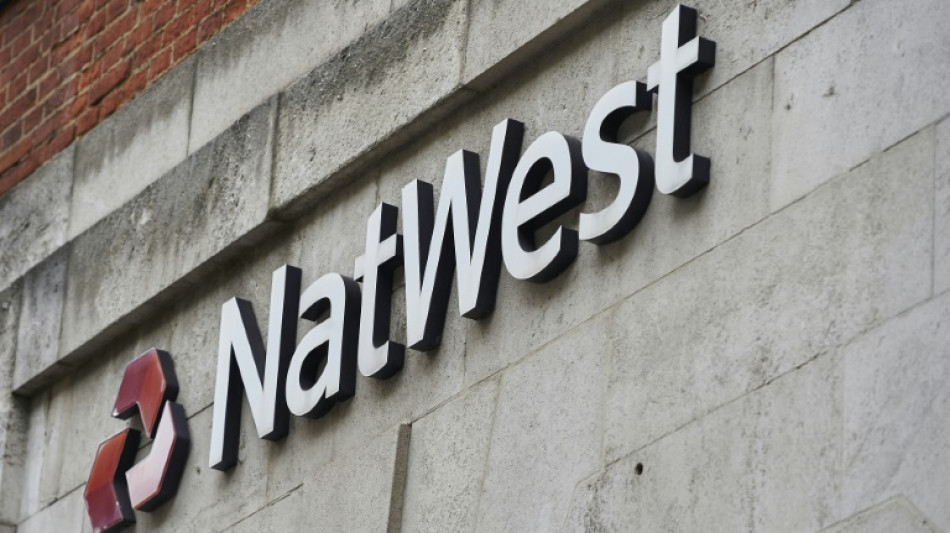
Britain cedes control of bailed-out NatWest bank

 Kenya's economy faces climate change risks: World Bank

 Mixed US auto sales in Q2 amid high gas prices
 'Gus' the T. rex presented in New York ahead of auction
 Mixed US auto sales in 2nd quarter amid high gas prices
 Record heat broils US east coast amid World Cup, July Fourth events
 Portugal braces for high temperatures in new heatwave
 Planned 1.7 million satellites 'devastating' for astronomy: study
 Canada to join Eurovision Song Contest

 Chinese firm sells hyper-real, 'always loyal' humanoid robots

 Trump earned over $1 bn from crypto ventures in 2025

 The Afghan women farmers keeping their village alive
 After 250 years, the 'American dream' is tarnished but alive
 No corn dogs? Trump's 'Great American State Fair' threatens to be a flop

 CIA boss compares cutting-edge AI to nuclear weapons

 Taps run dry in Hungarian village as heatwave bites
 Inflation slows in top eurozone economies as ECB ponders next move
 Data centres emitting more CO2 than thought: study

 Thousands march to demand illegal migrants leave South Africa

 Stocks climb, yen stays near 40-year low against dollar
 Over 1 million migrants apply for Spain's mass regularisation: PM
 NASA robot mission aiming to rescue space telescope

 Affiliate of Pacific Avenue Capital Partners Completes Acquisition of ESE World from Amcor

 Extreme heat warning issued for World Cup host Kansas City
 Tech rebound lifts Dow to record, yen hits 40-year low against dollar
 Europe's deadly heatwave scorches east, Slovakia hits record

Britain announced Monday that it has ceded control of bailed-out bank giant NatWest, cutting its stake to below 50 percent for the first time since the global financial crisis.
The government has sold off another tranche of shares for more than £1.2 billion ($1.6 billion, 1.4 billion euros), taking its holding from 50.6 percent to 48.1 percent.
The group was rescued with £45.5 billion of taxpayers' cash in the world's biggest banking bailout at the height of the 2008 meltdown.
"This is a landmark in the government's plan to return to private ownership the institutions brought into public ownership as a result of the 2007-2008 financial crisis," the Treasury said in a statement.
The UK had already returned state-rescued Lloyds Banking Group to full private ownership five years ago.
- 'Important milestone' -
NatWest Chief Executive Alison Rose described Monday's news as an "important milestone".
Britain has sold about 550 million shares at 220.5 pence per share to NatWest, which was formerly known as Royal Bank of Scotland (RBS).
"This sale means that the government is no longer the majority owner of NatWest Group and is therefore an important landmark in our plan to return the bank to the private sector," added Economic Secretary to the Treasury John Glen.
"We will continue to prioritise delivering value for money for the taxpayer as we take forward this plan."
At its peak, the government owned 84 percent of the financial services giant but this has been gradually reduced.
The Edinburgh-based bank was ravaged by its badly-timed consortium takeover of Dutch bank ABN Amro at the top of the market in 2007, just before the financial crisis struck.
RBS has since undertaken a massive restructuring to sell assets, slash its balance sheet and axe thousands of jobs worldwide.
The bank returned to net profit in 2017 after nine straight annual losses.
The group's performance has been blighted, however, by litigation and conduct costs, including compensation for a mis-selling credit insurance scandal.
Rose, the first female CEO of a major UK lender, renamed the bank NatWest in a bid to move on from its troubled past.
In the wake of the pandemic, RBS sank into the red in 2020 after setting aside billions to cover potential Covid fallout.
But NatWest rebounded back into profit last year as the British economy recovered from Covid.
Since 2008, the group has axed its total workforce from almost 200,000 staff to 56,200 in 2021.
And it has dramatically slashed its balance sheet from £2.2 trillion to just £782 billion.
The bank exited 35 nations and currently operates in 19 countries.
- 'Champagne on ice' -
NatWest shares rose 1.9 percent to 224.70 pence in late Monday morning trade on London's rising FTSE 100 index.
However, analysts cautioned about adverse fallout from soaring living costs in home market Britain.
"Natwest is finally free of state control after well over a decade," said AJ Bell investment director Russ Mould.
"Any champagne might have to be put on ice given the challenges facing the bank from the cost-of-living crisis and the risks of mounting bad debts."
X.Wong--CPN