Mykolaiv residents dare to hope after Russian threat eases

 Kenya's economy faces climate change risks: World Bank
 Streamex is making digital gold accessible

 US stocks retreat to open Q3 ahead of June jobs data
 Oppressive heat broils US during World Cup, July Fourth

 Rufus the hawk patrolling Wimbledon tennis club

 US Fed chair says committed to combatting 'too high' prices
 England breaks record for warmest June: Met Office

 Trump defends earning more than $1bn on crypto

 Swedish court orders Google pay $1.46 bn for favouring its price comparisons

 China imposes 'national security' rules on overseas investments
 Indian sailors fear returning to Gulf after Middle East war
 Fear and anger brew inside Meta amid AI frenzy

 World Bank to phase out lending to China by 2031
 Tepid outlook weighs on Nike despite tariff refund boost
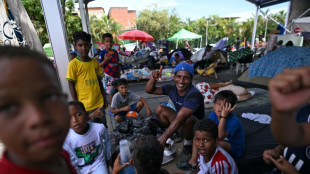 Football brings joy to Venezuelan kids displaced by quakes
 German rail regulator backs Italian firm in competition spat

 Record number of 'new millionaires' in 2025, says UBS

 Ride-share group BlaBlaCar taps AI for 20-country expansion
 MEXC Lists Ondo's Tokenized Strategy Preferred Stock on Spot Market
 Germany's labour market dilemma: rising unemployment despite vacancies
 New Oxford academic centre symbolises UK's big-donor era
 Taiwan's ageing seaweed harvesters hope younger women wade in

 HUNTING/HER Headhunter Talk with EnBW Board Member & CHRO Colette Rückert-Hennen
 World Bank drops climate finance targets in renewed action plan

 US Supreme Court rules on dragnet searches of cellphone location data
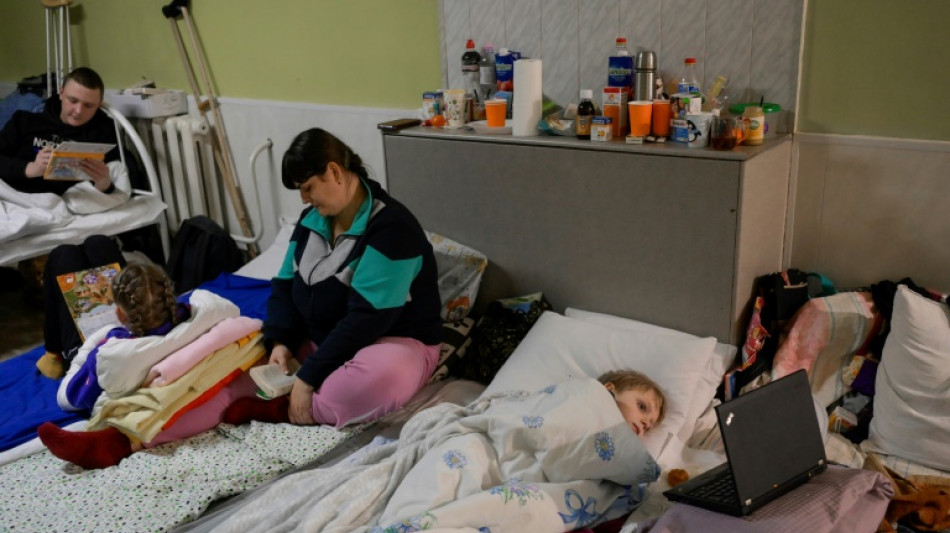
For three weeks, 13-year-old Sofia has been stuck in bed in the basement of a hospital in the southern Ukrainian city of Mykolaiv undergoing three operations that have still not removed all the shrapnel from her skull.
Yet, she's still smiling, dreaming of playing the guitar and one day becoming a painter.
After some terrible weeks in which the Russian army has tried -- in vain -- to blow up this strategic city, the threat in the last few days seems to have eased a bit.
The frontline has even moved back slightly after Ukrainian forces launched a counter-offensive in Kherson, about 80 kilometres (50 miles) to the southeast, the country's only major city seized by Russian troops.
Mykolaiv is a key city on the road to Odessa, Ukraine's biggest port.
While dozens of residents, including many children, are leaving the city on yellow coaches every morning headed west, others are beginning to hope for a return to an almost normal life.
"The weather is beautiful," said the regional governor, Vitaly Kim, in one of the videos on social media that has made him popular since the Russian invasion. "And without strikes, it would be even more so."
At the weekend, the air raid sirens no longer disturb onlookers, who are more and more on the streets. Most barely hurry when they hear them.
It was one of these strikes on March 5 on a village near Mykolaiv that led Sofia to the basement of the paediatric hospital from which she dreams of leaving soon.
"She received shrapnel to the head, some of which have not yet been able to be removed," says her mother, Ludmila, at the teenager's bedside where Sofia lies under a colourful blanket with a big white teddy bear for a companion.
"Now I can move my arms and legs a little, I still can't get up without my mother's help, but hopefully I can leave soon," says a stoic Sofia, with bandages on her hands and on her head in the neurosurgery department, demarcated by sheets hung on a wire with clothes pegs.
- 'Situation has stabilised' -
"She has already undergone several operations, but the pieces are still there. Her life is no longer in danger, but it could harm her health, so that's why we are preparing to operate again," says Irina Tkachenko, a medical officer at the hospital.
"I know that I must not let myself go, otherwise I will crack," says Ludmila, who pushes back tears before recovering, a little reassured by the courage shown by her daughter.
"I want to make a guitar to learn to play," Sofia says, "since my little brother broke mine". "But we'll buy you one," her mother gently promises her.
"I dream of being an artist, I studied painting for a semester," Sofia continues, adding: "I want to be a famous painter and live from my art."
On the other side of the sheet is Micha, five, who lost his mother in a bombing. With his head wrapped in a thick bandage, he gets up from his cluttered bed to let his grandparents help him get dressed.
"We turned our basement into a shelter, divided into sections for neurosurgery, surgery, traumatology and neonatology," Tkachenko says.
"At the height of war, when we were attacked by fascists -- there is no other word -- we had 12 children admitted with injuries of varying severity," says the hospital's chief doctor, Alexander Plitkin, "as well as two we could not save".
"Now the situation has stabilised a bit," he adds.
In another sign of respite, the governor eased restrictions on the sale of alcohol by allowing it on weekends but warned the limits would be reinstated in the event of excess.
T.Morelli--CPN