EU negotiators agree landmark law to curb Big Tech

 Kenya's economy faces climate change risks: World Bank

 Streamex is making digital gold accessible
 US stocks retreat to open Q3 ahead of June jobs data

 Oppressive heat broils US during World Cup, July Fourth
 Rufus the hawk patrolling Wimbledon tennis club

 US Fed chair says committed to combatting 'too high' prices

 England breaks record for warmest June: Met Office

 Trump defends earning more than $1bn on crypto

 Swedish court orders Google pay $1.46 bn for favouring its price comparisons

 China imposes 'national security' rules on overseas investments

 Indian sailors fear returning to Gulf after Middle East war

 Fear and anger brew inside Meta amid AI frenzy

 World Bank to phase out lending to China by 2031

 Tepid outlook weighs on Nike despite tariff refund boost

 Football brings joy to Venezuelan kids displaced by quakes

 German rail regulator backs Italian firm in competition spat
 Record number of 'new millionaires' in 2025, says UBS

 Ride-share group BlaBlaCar taps AI for 20-country expansion

 MEXC Lists Ondo's Tokenized Strategy Preferred Stock on Spot Market

 Germany's labour market dilemma: rising unemployment despite vacancies

 New Oxford academic centre symbolises UK's big-donor era

 Taiwan's ageing seaweed harvesters hope younger women wade in

 HUNTING/HER Headhunter Talk with EnBW Board Member & CHRO Colette Rückert-Hennen

 World Bank drops climate finance targets in renewed action plan
 US Supreme Court rules on dragnet searches of cellphone location data

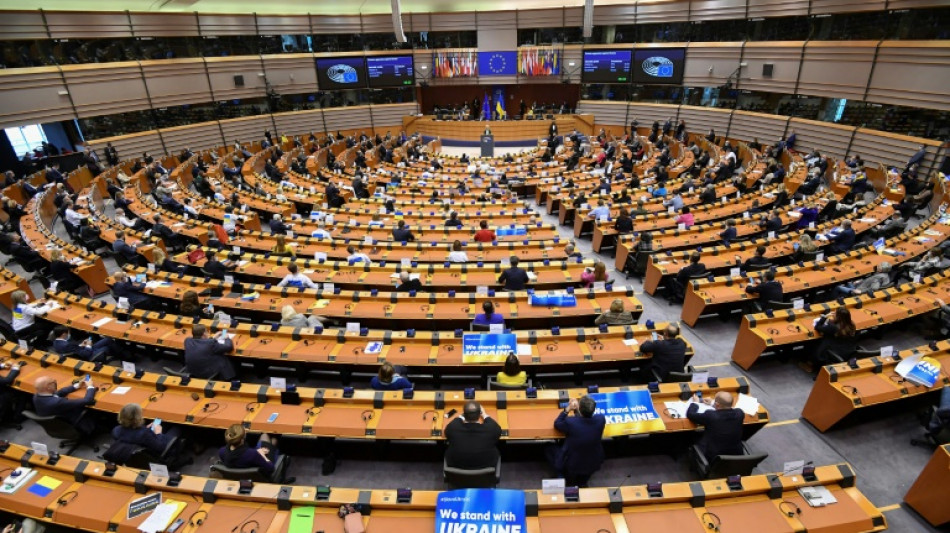
Negotiators from the European Parliament and EU member states agreed Thursday on a landmark law to curb the market dominance of US big tech giants such as Google, Meta, Amazon and Apple.
Meeting in Brussels the lawmakers nailed down a long list of do's and don'ts that will single out the world's most iconic web giants as internet "gatekeepers" subject to special rules.
The "Digital Markets Act" (DMA) has sped through the bloc's legislative procedures and is designed to protect consumers and give rivals a better chance to survive against the world's powerful tech juggernauts.
"The agreement ushers in a new era of tech regulation worldwide," said German MEP Andreas Schwab, who led the negotiations for the European Parliament.
"The Digital Markets Act puts an end to the ever-increasing dominance of Big Tech companies," he added.
The main point of the law is to avert the years of procedures and court battles needed to punish Big Tech's monopolistic behaviour where cases can end with huge fines but little change in how the giants do business.
Once implemented, the law will give Brussels unprecedented authority to keep an eye on decisions by the giants, especially when they pull out the chequebook to buy up promising startups.
"The gatekeepers -- they now have to take responsibility," said the EU's competition supremo Margrethe Vestager.
"A number of things they can do, a number of things they can't do, and that of course gives everyone a fair chance," she added.
- 'Concrete impacts' -
The law contains about 20 rules that in many cases target practices by Big Tech that have gone against the bloc's rules on competition, but which Brussels has struggled to enforce.
The DMA imposes myriad obligations on Big Tech, including forcing Apple to open up its App Store to alternative payment systems, a demand that the iPhone maker has opposed fiercely, most notably in its feud with Epic games, the maker of Fortnite.
Google will be asked to clearly offer users of Android-run smartphones alternatives to its search engine, the Google Maps app or its Chrome browser.
Apple would also be forced to loosen its grip on the iPhone, with users allowed to uninstall its Safari web browser and other company-imposed apps that users cannot currently delete.
In a statement, Apple swiftly expressed regret over the law, saying it was "concerned that some provisions of the DMA will create unnecessary privacy and security vulnerabilities for our users".
After a furious campaign by influential MEPs, the law also forces messaging services such as Meta-owned WhatsApp to make themselves available to users on other services such as Signal or Apple's iMessage, and vice-versa.
France, which holds the EU presidency and negotiated on behalf of the bloc's 27 member states, said the law would deliver "concrete impacts on the lives of European citizens".
"We are talking about the goods you buy online, the smartphone you use every day, and the services you use every day," said France's digital affairs minister, Cedric O.
- 'Comply or Challenge' -
Violation of the rules could lead to fines as high as 10 percent of a company's annual global sales and even 20 percent for repeat offenders.
The DMA "will have a profound impact on the way some gatekeepers' operations are currently conducted," said lawyer Katrin Schallenberg, a partner at Clifford Chance.
"Clearly, companies affected... are already working on ways to comply with or even challenge the regulation," she added.
The Big Tech companies have lobbied hard against the new rules and the firms have been defended in Washington, where it is alleged that the new law unfairly targets US companies.
With the deal now reached by negotiators, the DMA now faces final votes in a full session of the European Parliament as well as by ministers from the EU's 27 member states.
The rules could come into place starting on January 1, 2023, though tech companies are asking for more time to implement the law.
L.Peeters--CPN