Ukraine war rattles EU green farming plan

 Kenya's economy faces climate change risks: World Bank
 EU top court to rule on record 4.1 bn euro Google fine
 Streamex is making digital gold accessible
 US stocks retreat to open Q3 ahead of June jobs data
 Oppressive heat broils US during World Cup, July Fourth
 Rufus the hawk patrolling Wimbledon tennis club
 US Fed chair says committed to combatting 'too high' prices
 England breaks record for warmest June: Met Office
 Trump defends earning more than $1bn on crypto

 Swedish court orders Google pay $1.46 bn for favouring its price comparisons

 China imposes 'national security' rules on overseas investments
 Indian sailors fear returning to Gulf after Middle East war
 Fear and anger brew inside Meta amid AI frenzy
 World Bank to phase out lending to China by 2031
 Tepid outlook weighs on Nike despite tariff refund boost
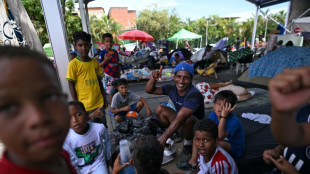 Football brings joy to Venezuelan kids displaced by quakes
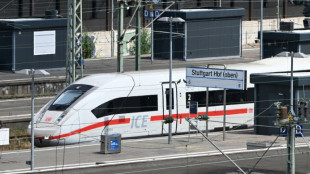 German rail regulator backs Italian firm in competition spat
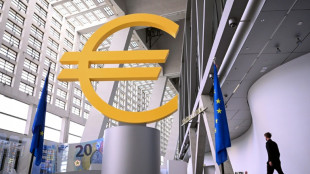
 Record number of 'new millionaires' in 2025, says UBS
 Ride-share group BlaBlaCar taps AI for 20-country expansion
 MEXC Lists Ondo's Tokenized Strategy Preferred Stock on Spot Market
 Germany's labour market dilemma: rising unemployment despite vacancies
 New Oxford academic centre symbolises UK's big-donor era
 Taiwan's ageing seaweed harvesters hope younger women wade in
 HUNTING/HER Headhunter Talk with EnBW Board Member & CHRO Colette Rückert-Hennen
 World Bank drops climate finance targets in renewed action plan
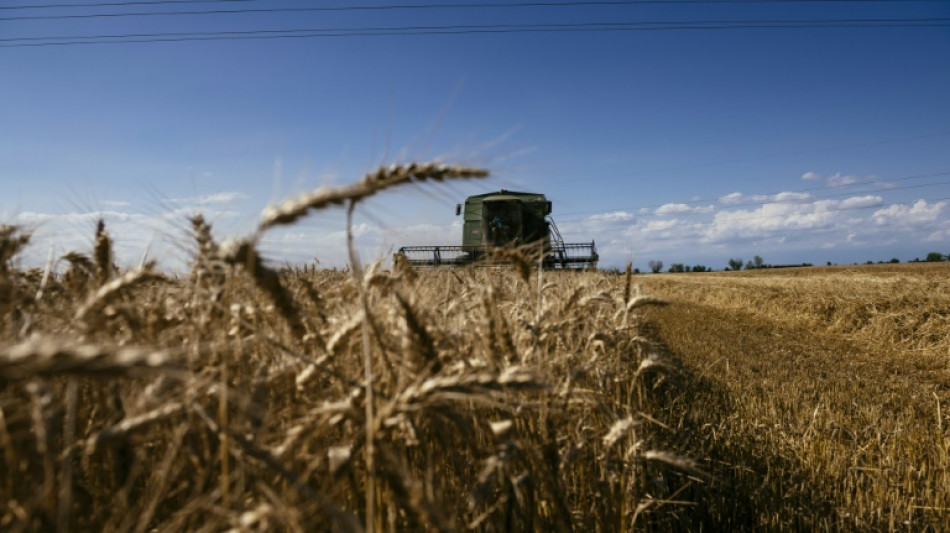
Scientists are urging Europe not to delay the transition to greener agriculture in response to Russia's invasion of Ukraine, which threatens global wheat supplies and raises fears over food shortages.
The European Commission is preparing to pass emergency measures on Wednesday to deal with the consequences of the war and sanctions on Russia, also a major exporter of cereals.
That will include granting temporary exemptions for fallow land, but some states, including agricultural powerhouse France, are calling for a much greater roll-back of the EU’s green agricultural policies.
The bloc's "Farm to Fork" strategy -- which aims to slash pesticide use by half, cut fertilisers by 20 percent and devote a quarter of agricultural land to organic farming this decade -- was due to be officially outlined in legislative texts unveiled on Wednesday. They have been postponed indefinitely.
"This is very bad news," said An Lambrechts, of Greenpeace International, from Geneva, where international negotiations are taking place for better protection of biodiversity.
That view is shared by scientists.
An appeal signed by more than 500 experts has called on the European Union to "reinforce -- and not abandon -- the transformation towards a healthy, just, and environmentally-friendly food system".
“We have to look at sensible short-term measures but we must not neglect those long-term targets," said Hermann Lotze-Campen, agricultural economist at the Potsdam Institute for Climate Impact Research (PIK), which led the appeal.
"Because reducing greenhouse gas emissions and protecting biodiversity are absolutely necessary to sustain and ensure long-term food production."
Intensive agriculture contributes to climate change, environmental pollution and poses risks to human health.
"We should not only look at the supply side, but also that we have to reduce our consumption of animal-based products and then reduce the number of livestock," Lotze-Campen told AFP.
- Economic aid -
About 60 percent of European cereal production is used for feeding pigs, chickens or cows, and just under 10 percent is used to produce fuel.
"Today, the main reason why we could run out of cereals in Europe is that we put too much of it in engines and that we give too much of it to animals," said Pierre-Marie Aubert of the IDDRI research centre.
He said cultivating fallow land is not a viable solution to increase agricultural production.
Often "it's not good land" for cultivation, he said, but it is needed to provide "key services that farmers depend on: pollination and pest control".
He said a better short-term answer would be economic aid for countries that are struggling to cope with soaring cereal prices.
The war in Ukraine has also underscored Europe's dependence on synthetic fertilisers from Russia and potash from Belarus.
But research in France has suggested that herbicides and nitrogen fertilisers can be cut by 30 to 50 percent from a high base, with no effect on yields.
Almost 200 countries are due to adopt a global framework this year to safeguard nature by mid-century from the destruction wrought by humanity, with a key milestone of 30 percent protected by 2030.
That must include better agricultural practices across the world, experts and activists say.
The European Union is positioning itself as a leader at the Geneva talks, which are laying the groundwork for the COP15 biodiversity summit later this year, hosted by China.
"The (European) Commission is about to delay vital actions which would protect our environment, and instead spend billions on activities which will lead to the destruction of important habitats and wildlife," said Anna Heslop from the NGO ClientEarth.
"These moves risk seriously undermining the EU's ability to claim leadership over protecting nature at a global level when it can't stick to its word at home."
Y.Ponomarenko--CPN