How Russia's war in Ukraine rocked the global economy

 Kenya's economy faces climate change risks: World Bank

 EU top court to rule on record 4.1 bn euro Google fine

 Streamex is making digital gold accessible
 US stocks retreat to open Q3 ahead of June jobs data

 Oppressive heat broils US during World Cup, July Fourth
 Rufus the hawk patrolling Wimbledon tennis club

 US Fed chair says committed to combatting 'too high' prices

 England breaks record for warmest June: Met Office
 Trump defends earning more than $1bn on crypto

 Swedish court orders Google pay $1.46 bn for favouring its price comparisons

 China imposes 'national security' rules on overseas investments
 Indian sailors fear returning to Gulf after Middle East war
 Fear and anger brew inside Meta amid AI frenzy
 World Bank to phase out lending to China by 2031

 Tepid outlook weighs on Nike despite tariff refund boost
 Football brings joy to Venezuelan kids displaced by quakes
 German rail regulator backs Italian firm in competition spat
 Record number of 'new millionaires' in 2025, says UBS

 Ride-share group BlaBlaCar taps AI for 20-country expansion

 MEXC Lists Ondo's Tokenized Strategy Preferred Stock on Spot Market
 Germany's labour market dilemma: rising unemployment despite vacancies

 New Oxford academic centre symbolises UK's big-donor era
 Taiwan's ageing seaweed harvesters hope younger women wade in

 HUNTING/HER Headhunter Talk with EnBW Board Member & CHRO Colette Rückert-Hennen

 World Bank drops climate finance targets in renewed action plan
In a month of conflict in Ukraine, global oil prices have soared, foreign companies have exited Russia and Moscow faces the spectre of default.
Here is a look at the economic fallout from Russia's February 24 invasion of its neighbour:
- Commodities soar -
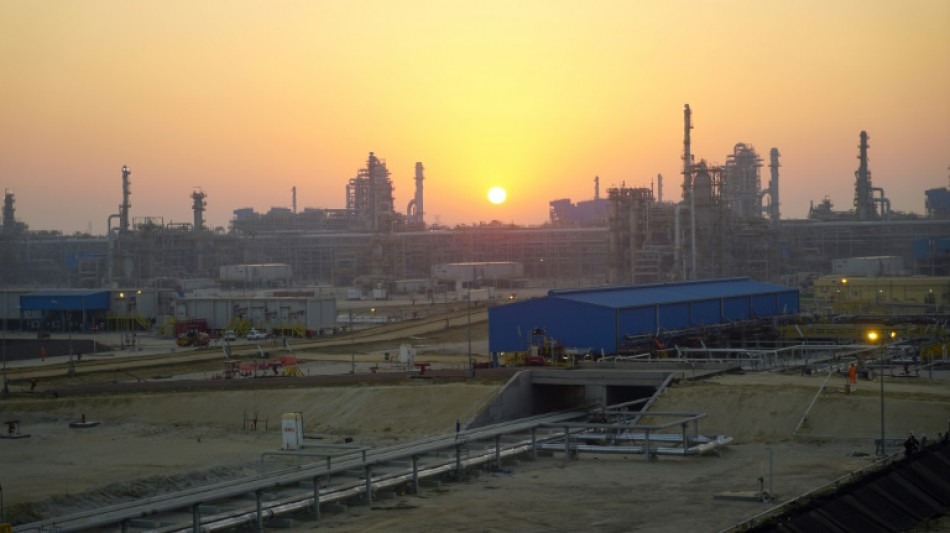
Oil and gas prices have surged over supply fears as Russia is one of the world's biggest producers and exporters of the fossil fuels.
Brent North Sea crude, the international benchmark, stood at around $90 in February. On March 7, it jumped to $139.13, close to a 14-year high and prices remain highly volatile.
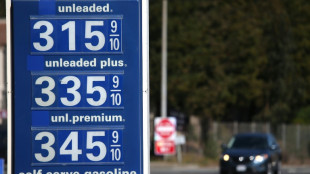
Prices have risen at the pump, too, prompting governments to take measures to ease the financial pain for consumers: A lower VAT in Sweden, a price cap in Hungary, or a discount in France.
Gas prices have also skyrocketed, with Europe reference Dutch TTF leaping to an all-time high at 345 euros on March 7.
The United States, Canada and Britain have announced Russian oil bans.
The European Union has avoided sanctions on Russia's energy sector as countries such as Germany rely heavily on Moscow's gas supplies.
Other commodities massively produced in Russia have soared, including nickel and aluminium.
Auto industry supply chains face disruptions as key parts come from Ukraine.
- Food threat -
UN chief Antonio Guterres has warned that the conflict could reverberate far beyond Ukraine, causing a "hurricane of hunger and a meltdown of the global food system".
Russia and Ukraine are breadbaskets for the world, accounting together for 30 percent of global wheat exports.
Prices of cereals and cooking oils have risen.
The UN's Food and Agriculture Organization says the number of undernourished people could increase by eight to 13 million people over the course of this year and next.
Ships are not leaving Ukraine and there are concerns about the upcoming sowing season in the country.
The United States, India and Europe could cover wheat shortages. But it could be more complicated to replace sunflower oil and corn, of which Ukraine is the world's number one and number four exporter, respectively.
- Markets rattled -
Stock markets had started off 2022 on a good note as economies recovered from the Covid pandemic and companies posted healthy results.
But the war has brought volatility to the markets while Moscow's stock exchange closed for three weeks and only partially reopened on Monday.
Western sanctions have paralysed the Russian banking sector and financial system, while the ruble has collapsed.
The measures include efforts to freeze $300 billion of Russia's foreign currency reserves held abroad.
Russia now faces the risk of defaulting on debt for the first time in decades.
Moscow paid interest on two dollar-denominated bonds last week, giving the government some breathing room until the next debt payments in the coming weeks.
- Firms flee -
Hundreds of Western firms have closed shops and offices in Russia since the war started -- due to the sanctions, political pressure or public opinion.
The list includes famous names such as Ikea, Coca-Cola and MacDonald's.
Russian President Vladimir Putin has raised the threat of nationalising foreign-owned companies.
Some companies have chosen to stay in Russia, citing their social responsibility to not abandon their local employees and deprive the population of essential goods.
- Slower growth -
The war threatens to be a drag on the global economic recovery from the Covid pandemic.
The OECD has warned that the conflict could inflict a one-percentage-point hit on global growth.
The IMF is expected to lower its growth forecast, which currently stands at 4.4 percent for 2022.
"The entire global economy will feel the effects of the crisis through slower growth, trade disruptions, and steeper inflation, harming especially the poorest and most vulnerable," the IMF, World Bank and European Bank for Reconstruction and Development (EBRD) warned in a joint statement.
With inflation soaring, analysts fear economies could face a period of stagflation -- a toxic mix of rising prices and weak growth.
"Even if the war stopped today, the consequences of this conflict would be felt for months to come, and that would work through commodity prices," the EBRD's chief economist, Beata Javorcik, told AFP.
burs-gk/pn/lth/cdw
D.Philippon--CPN