Fed prepared to raise interest rates 'aggressively:' Powell

 Kenya's economy faces climate change risks: World Bank
 Budding chefs cook up new career at China's BBQ academy

 'Job forever': trade schools are all the rage in the AI era

 Mixed US auto sales in Q2 amid high gas prices
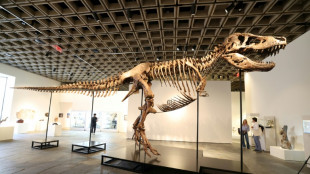 'Gus' the T. rex presented in New York ahead of auction

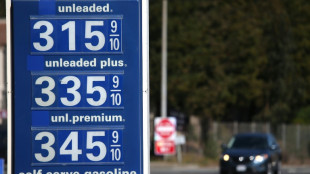 Mixed US auto sales in 2nd quarter amid high gas prices

 Record heat broils US east coast amid World Cup, July Fourth events
 Portugal braces for high temperatures in new heatwave

 Planned 1.7 million satellites 'devastating' for astronomy: study
 Canada to join Eurovision Song Contest

 Chinese firm sells hyper-real, 'always loyal' humanoid robots
 Trump earned over $1 bn from crypto ventures in 2025

 The Afghan women farmers keeping their village alive
 After 250 years, the 'American dream' is tarnished but alive
 No corn dogs? Trump's 'Great American State Fair' threatens to be a flop

 CIA boss compares cutting-edge AI to nuclear weapons

 Taps run dry in Hungarian village as heatwave bites

 Inflation slows in top eurozone economies as ECB ponders next move
 Data centres emitting more CO2 than thought: study

 Thousands march to demand illegal migrants leave South Africa

 Stocks climb, yen stays near 40-year low against dollar
 Over 1 million migrants apply for Spain's mass regularisation: PM
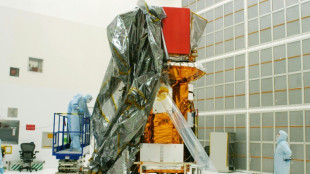 NASA robot mission aiming to rescue space telescope

 Affiliate of Pacific Avenue Capital Partners Completes Acquisition of ESE World from Amcor

 Extreme heat warning issued for World Cup host Kansas City

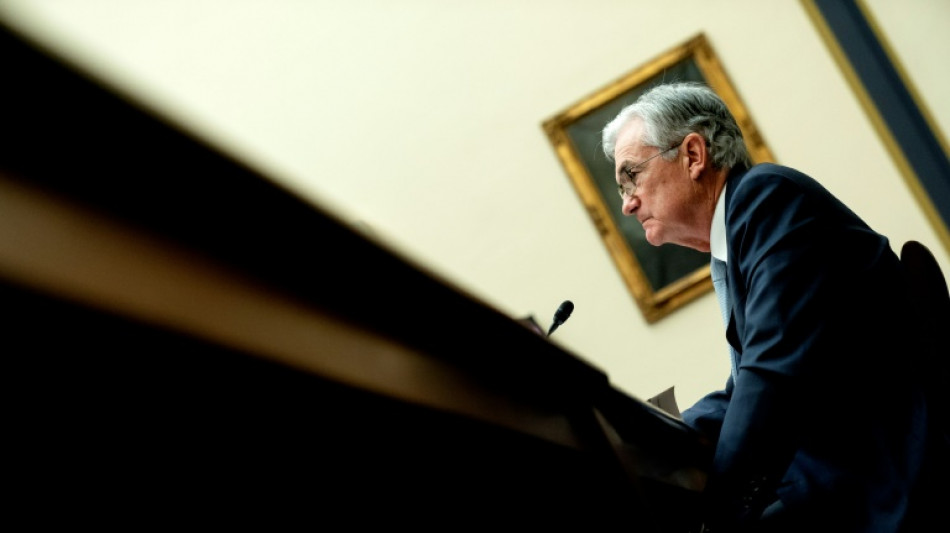
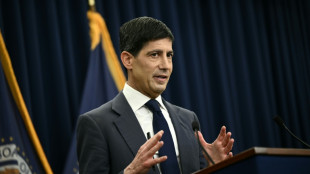
The US central bank is prepared to raise interest rates by bigger steps than the quarter-point hike announced last week if that is what's needed to contain "much too high" inflation, Federal Reserve Chair Jerome Powell said Monday.
Consumer prices in the world's largest economy have surged to the highest seen in four decades, and the Fed last week raised the benchmark lending rate for the first time since the Covid-19 pandemic began to try to tamp down inflation pressures.
"If we conclude that it is appropriate to move more aggressively by raising the federal funds rate by more than 25 basis points at a meeting or meetings, we will do so," Powell said in a speech to an economics conference.
Inflation was already rising before the Russian invasion of Ukraine added to new price pressures and supply chain impediments that could spill over to the US economy, he told the National Association for Business Economics.
"There is an obvious need to move expeditiously" to remove the stimulus the Fed provided to the American economy during the pandemic, but Powell said central bankers are prepared to go beyond "neutral" and tighten policy if needed to achieve their goal.
Last week's rate hike was billed as the first in a series, and several policymakers have expressed willingness -- or the need -- to move in bigger steps.
- 'Very strong' economy -
St Louis Fed Bank President James Bullard dissented in the vote at last week's meeting of the policy-setting Federal Open Market Committee, because he wanted a half-point increase as the first move.
Atlanta Fed Bank President Raphael Bostic, who spoke to the NABE conference early Monday, said he will "adapt" his views to the data, even if it means raising a full point.
"I'm comfortable with more aggressive movements if that's what the data and the evidence suggests is appropriate," said Bostic, who unlike Bullard is not currently a voting member of the FOMC.
"I'm going to be very, very open in terms of my approach ... it could at some point be move nothing. It could be 25; it could be 50; it could be 75; it could be one," Bostic told reporters.
Like Bostic, Powell said the key issue is containing prices, and he dismissed the idea of raising the Fed's inflation target to three percent from two percent.
"Inflation is much too high. We have the necessary tools, and we will use them to restore price stability," he said.
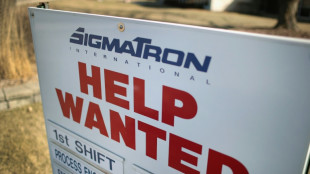
The labor market is posing challenges however, with employers struggling to fill open positions, and many people staying out to the workforce, in part to care for children.
The Fed chief noted that the sum of jobs and vacancies is about five million bigger than the size of the US labor force.
"This is a labor market that is out of balance," Powell said in response to a question, adding "We need the labor market to be sustainably tight."
He was optimistic the Fed can grind down inflation and sustain a strong job market without tipping the US economy into a recession, an elusive goal known as a "soft landing" -- and he does not see "elevated" risk of recession in the next year.
Even with the oil price shock sparked by the conflict in Ukraine, he noted that "today the economy is very strong and is well positioned to handle tighter monetary policy."
But he cautioned that "very little is straightforward in the current context," and there is high uncertainty about the impact of the war.
C.Peyronnet--CPN