
Ukraine war impact on US economy 'highly uncertain': Fed chief

 AI chip giant SK hynix posts seven-fold surge in quarterly operating profit

 S.African activists push back on data centre rush

 Billionaire Ambani's Jio to debut after record India IPO

 UK set for cautious budget as borrowing costs climb

 US Fed expected to hold rates steady ahead of key midterm elections

 AI chip giant SK hynix says quarterly operating profit soars 630%

 Charles tackles thorny legacy of slavery on Caribbean trip

 UN nuclear watchdog chief urges Iran to grant access

 Boeing releases cautious growth plan as shares fall sharply
 Tech firms gain on Anthropic IPO optimism; HSBC slumps in London

 Tech firms track Wall St rally on mixed day for stock markets

 HSBC profit jumps on higher rates, lower costs

 Reparations calls follow Charles on tough Caribbean trip

 China brands drop Mbappe for 'offending national sentiments'

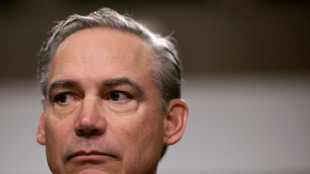
The impact of the conflict in Ukraine on the US economy is "highly uncertain," and the central bank will need to adjust quickly to ensure the post-pandemic recovery continues, Federal Reserve Chair Jerome Powell said Wednesday.
With prices rising at their fastest pace in four decades and oil soaring to around $108 a barrel due to the war, the Fed chief repeated that policymakers are ready to raise interest rates to tamp down inflation.
However, Powell said the central bank will "proceed carefully," and he favors increasing the benchmark borrowing rate by a modest quarter-point at the Fed's meeting later this month, although a more aggressive move is possible if inflation remains high.
"The near-term effects on the US economy of the invasion of Ukraine, the ongoing war, the sanctions, and of events to come, remain highly uncertain," he said in his semi-annual testimony to Congress. "We will be monitoring the situation closely."
Some Federal Reserve officials have been calling for a more aggressive increase of half a percentage point at the March 15-16 meeting of the policy setting Federal Open Market Committee.
But in an unusally direct statement, Powell told lawmakers, "I'm inclined to propose and support a 25 basis point rate hike."
Economists note that while rising oil prices could fuel faster inflation, sanctions on Russia over the invasion and other spillovers could also slow the economic recovery.
Speaking before the House Financial Services Committee, Powell said if inflation accelerates or stays "persistently high," Fed policymakers "would be prepared to move more aggressively by raising the federal funds rate by more than 25 basis point at a meeting or meetings."
"The inflation that we're experiencing is just nothing like anything we've experienced in decades," he said.
- Need to be nimble -
The Fed slashed the benchmark lending rate to zero at the start of the pandemic, and flooded the financial system with cash in an effort to stave off a severe recession.
Together with massive federal spending programs, that effort was largely successful: the economy bounced back quickly, with growth of 5.7 percent in 2021.
But high demand, supply chain snarls and labor shortages have combined to push the Fed's preferred inflation index to 6.1 percent in the year ended in January, far above the two percent target.
Powell, who is awaiting Senate confirmation for a second term as Fed chair, said the central bank's goal is to "promote a long expansion" to ensure all segments of society benefit from the growing economy.
But he noted "high inflation imposes significant hardship" on Americans and the Fed will use all its tools to ensure the increased prices do not become entrenched.
The inflation wave has been driven in large part by supply chain bottlenecks that "have been larger and longer lasting than anticipated," he added.
While Powell said the Fed expects inflation "to decline over the course of the year as supply constraints ease... we are attentive to the risks of potential further upward pressure" on prices.
In addition to rising oil prices, other commodities, including wheat, could also spike due to the war.
US businesses also report continuing problems finding enough workers to ramp up production and meet strong demand.
"The labor market is extremely tight," Powell said, with unemployment at four percent, and "an unprecedented number of workers are quitting to take new jobs, and wages are rising at their fastest pace in many years."
Setting policy in the current environment "requires a recognition that the economy evolves in unexpected ways," he said, adding, "We will need to be nimble in responding to incoming data and the evolving outlook."
X.Wong--CPN