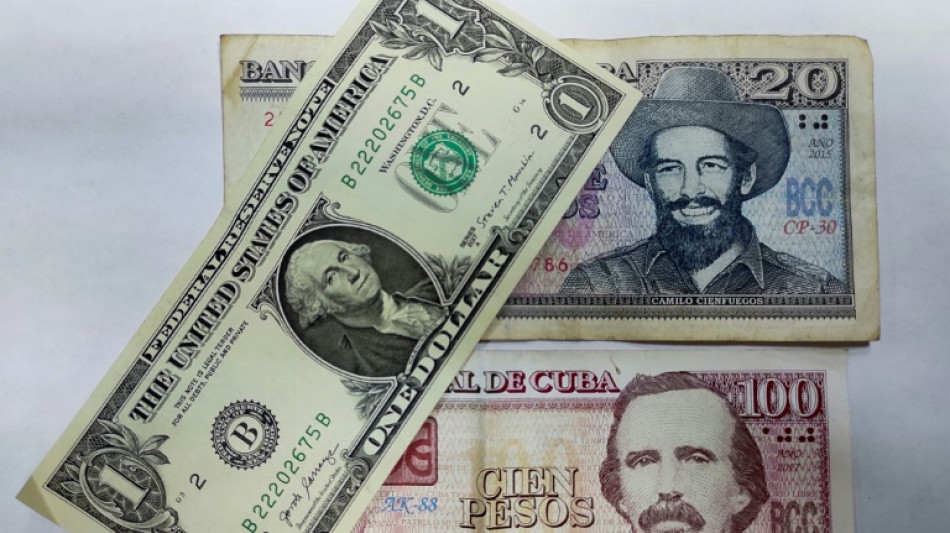
Cuba announces surprise reversal of US dollar deposit ban / Photo: Yamil LAGE - AFP/File

 UK PM 'open' to slavery apology but not reparations
 Complaints upheld against Swiss TV commentary on Israeli bobsleigher
 Canada, EU launch new alliance with deals on Ukraine, minerals, AI
 EU and Canada to 'withstand shocks together' with new alliance

 'Life in the old dog': German economy grows more than expected
Cuba's government on Monday announced a surprise lifting of its ban on US dollar deposits in banks, reversing a policy which had been in place across the communist island nation since June 2021.
"From this moment on, financial and banking institutions will accept cash deposits of US dollars in bank accounts," said a Central Bank of Cuba (BCC) resolution published Monday in the country's Official Gazette.
The Cuban government had announced the ban almost two years ago, saying at the time that the move was due to continuing difficulties caused by the ongoing US embargo.
The policy reversal comes as the island faces its worst economic crisis in three decades, with mounting shortages of food, medicines and fuel worsening in recent weeks.
However it is also seeing its vital tourism industry pick up following a collapse during the pandemic, which the government cited as one of the reasons for the move on Monday.
Cuba has been subject to broad US sanctions since 1962, hindering its government's ability to transact in dollars.
After a relative easing under the presidency of Barack Obama, sanctions were ramped up during Donald Trump's tenure in the White House. During his administration's final days in office in January 2021, the United States added Cuba back to its list of state sponsors of terrorism.
That designation occurred the same month that Cuba's government moved to end its parallel currencies, phasing out a convertible peso that was pegged to the dollar, leaving only the regular, weaker peso, or CUP.
Since then, the currency has fallen from 24 to an official rate of 120 to the dollar. On the black market, the rate is 185.
Trump's successor Joe Biden has kept up the prior administration's restrictions on Cuba, while Secretary of State Antony Blinken in March said the United States had no plans to lift the state sponsor of terrorism designation.
D.Goldberg--CPN