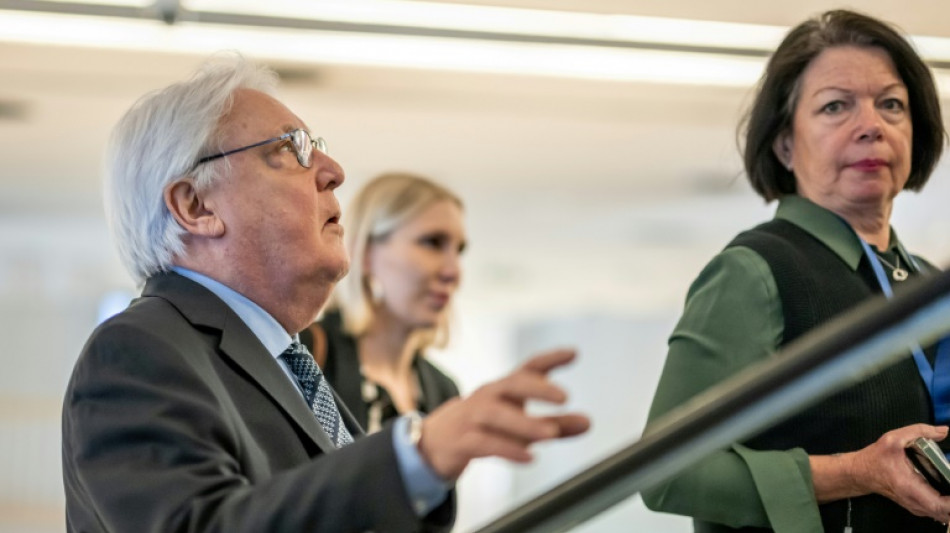
UN, Russia in Ukraine grain deal talks / Photo: Fabrice COFFRINI - AFP

 British king reflects on colonial atrocities in Guyana

 Monaco taken off global money-laundering 'grey list'
 Tears, fear, anger: relatives of Spain train crash dead await fate
 Wall Street tech rout deepens on doubts over AI spending

 Relatives' anguish grows as Spain identifies train crash dead

 Markets lashed by tech rout as earnings fan AI fears

 Tech sell-off deepens as earnings fan AI fears

 BP net profit quadruples as Mideast war lifts oil prices

 Drugs giant AstraZeneca reveals higher profits, savings plan
 French economy 'headed for a wall' as GDP shrinks
 South Korea to prosecute students cheating with smart glasses
The United Nations and Russia began talks Monday on renewing the Ukraine grain export deal, which has helped ease the global food crisis triggered by Moscow's invasion of its neighbour.
UN humanitarian chief Martin Griffith did not comment to reporters as he arrived for the talks at the Palais des Nations UN headquarters in Geneva, nor did Rebeca Grynspan, head of the UN's trade and development agency UNCTAD.
The Russian mission in Geneva confirmed to AFP that the talks had started.
Russia's full-scale invasion of Ukraine in February last year saw Ukraine's Black Sea ports blocked by warships until a deal signed in July allowed for the safe passage of exports of critical grain supplies.
More than 24.1 million tonnes have been exported under the UN and Turkey-brokered Black Sea Grain Initiative (BSGI), according to the UN.
The BSGI deal, which has helped ease the global food crisis caused by the invasion, will automatically renew on March 18 unless Moscow or Kyiv object.
But the Kremlin claims that a parallel agreement on Russian exports is not being respected.
While the BSGI concerns the export of Ukrainian grain, the second agreement, between Moscow and the UN, is aimed to facilitate the export of Russian food and fertilisers, which are exempt from Western sanctions imposed on Moscow.
Last Tuesday, UN chief Antonio Guterres said during a visit to Kyiv that it was crucial to extend the deal.
Grynspan was in the Ukrainian capital last Wednesday for talks on the BSGI.
Nearly half of the exports shipped under the deal are corn and more than a quarter are wheat, according to UN data.
Around 45 percent of the exports went to developed countries. The biggest recipient was China, followed by Spain, Turkey, Italy and the Netherlands.
C.Smith--CPN