Not so SWIFT: EU energy concerns spark Russia sanctions rift

 iPhone 18預購後出現可疑扣款 四間銀行調查未授權交易

 Galaxy Tab S12系列效果圖曝光 Ultra擬配雙鏡頭及瀏海螢幕
 Altman tells Fortune OpenAI will not go public in 2026

 ستاندرد آند بورز تثبت تصنيف السعودية عند A+

 Steven Strogatz weighs AI mathematics advances and their consequences for researchers

 Venezuelans outside Caracas say capital not sharing blackout burden

 Anthropic boss calls for slowing pace of AI development

 BRICS nations urge 'maximum restraint' in Middle East war

 Europe eyes battle over 'pervert' AI glasses

 Children in flood-hit Nepal grapple with loss, cling to hope

 Venice Film Festival: A look back on the highlights

 DR Congo school fire stampede death toll rises to 26: UNICEF

 Dance Fitness Tempe Announces Expansion of Accessible Digital Movement Programs

 Europe saw record summer air traffic despite Mideast war: Eurocontrol

 Relatives of 9/11 victims hit out at Saudi Arabia -- and US leaders

 Relative of 9/11 victim unleashes searing attack on Saudi Arabia

 Czech antitrust office lets Turkey's Pegasus Airlines buy Smartwings

 Investors on edge as energy costs, surging bond yields roil markets

 UK lawmakers to vote again on failed assisted dying bill

 Yemen's Houthis complete takeover of Bab al-Mandab area: govt official to AFP

 Fast-pace dance takes I.Coast's working-class streets by storm

 Fans celebrate Celine Dion's Paris return with giant karaoke

 Appreciation, anger await as Trump heads to Irish golf resort

 Putin arrives in India for BRICS summit coloured by wars

 Carney says in touch with Trump, Canada ready for 'fair' trade deal

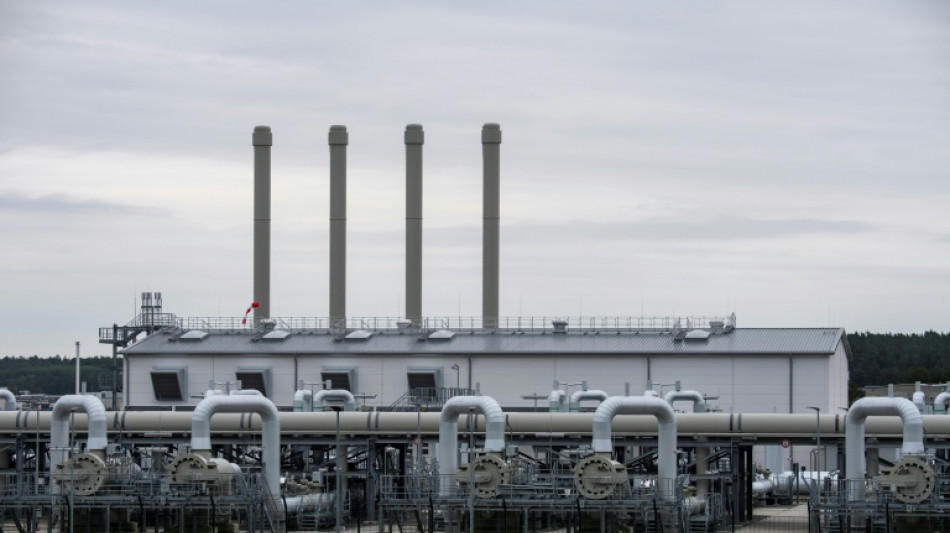
The West has agreed an onslaught of sanctions over Russia's invasion of Ukraine, but resistance from key EU nations fearful of severing their power sources has resulted in them holding off on banishing Moscow from the SWIFT banking transfer system.
Ukraine has expressly called on Western allies to expel Moscow from the system that banks rely on to transfer money.
But US President Joe Biden revealed this week that while it remains an option, "right now that's not the position that the rest of Europe wishes to take."
Former European Council President Donald Tusk lashed out at EU capitals over their failure to agree on the toughest sanctions such as cutting Russian banks off from SWIFT, exposing a rift within the bloc over its response.
"In this war, everything is real: Putin's madness and cruelty, Ukrainian victims, bombs falling on Kyiv. Only your sanctions are pretended (sic)," Tusk tweeted.
"Those EU governments, which blocked tough decisions (i.e. Germany, Hungary, Italy) have disgraced themselves."
But German Finance Minister Christian Lindner laid out starkly the preoccupation of Europe's biggest economy: suspension of SWIFT "would mean that there is a high risk that Germany will no longer receive gas, raw material supplies from Russia".
Lindner told public television he was "open" to including SWIFT "in the course of possible further toughening of sanctions" while adding that allies would "have to be aware of the consequences."
With 40 percent of gas consumed in Europe arriving from Russia, Germany's fears about the possibility of severe disruptions are well founded.
Austria, Hungary and Italy are also reluctant, pitting them against Poland, the Baltic states and non-EU member Britain.
Hungarian Prime Minister Viktor Orban alluded to his key concern -- energy prices -- as he announced sanctions agreed by the EU late Thursday.
"These sanctions do not extend to energy; so, despite the sanctions, energy supplies to Hungary and the other member states of the EU are guaranteed," he said.
- Not Iran -
Founded in 1973, the Society for Worldwide Interbank Financial Telecommunication, or SWIFT, does not actually handle any transfers of funds itself.
But the system is used by banks to send standardised messages about transfers of sums between themselves, transfers of sums for clients, and buy and sell orders for assets.
A country that is shut out of the system could still arrange for settlements of payments or transfers on a case-by-case basis.
But it would be severely crippled in its ability to trade with others, as Iran had seen when it was disconnected from the system between 2012 and 2016 over its nuclear programme.
Yet Lindner said the jury was out on whether the sanction would indeed hurt Moscow as much as it did Tehran.
"I fear that Putin has already built up an alternative to this SWIFT system," he said.
Calls for Russia to be excluded from SWIFT had already been made in 2014 when Russia annexed Crimea from Ukraine and Moscow has since sought to build up its own system.
The Russian System for Transfer of Financial Messages connects 400 Russian banks and being booted out of SWIFT could well accelerate its development.
Austrian Chancellor Karl Nehammer also cited experts' estimates that exclusion from SWIFT "won't bring the necessary success" as opposed to the EU package agreed on Thursday, which he said directly hits 70 percent of Russian banks.
For now, the option remains on the table, although French Finance Minister Bruno Le Maire has said that removing Moscow from SWIFT is a "last resort".
Asked what kind of further aggression must come from Russia against Ukraine before the EU would cut it off from SWIFT, German Chancellor Olaf Scholz's spokesman suggested that not including it in Thursday's package partly came down to the question of the expediency of implementation.
Such a move would be "technically complex to prepare" and have "severe consequences on the transactions traffic in Germany and for German companies doing business with Russia, but also for energy delivery payments, and all that must be well prepared," said Steffen Hebestreit.
Meanwhile the Baltic countries, which directly border Russia, said they had not given up hope on the adoption of the measure.
"We will try and try again to persuade our partners to switch Russia off from SWIFT... if not in this sanctions package, maybe in the next one. We don't have to wait until there are gunfights in the streets of Kyiv and dead bodies lying around," Latvian Foreign Minister Edgars Rinkevics told reporters Friday.
L.Peeters--CPN