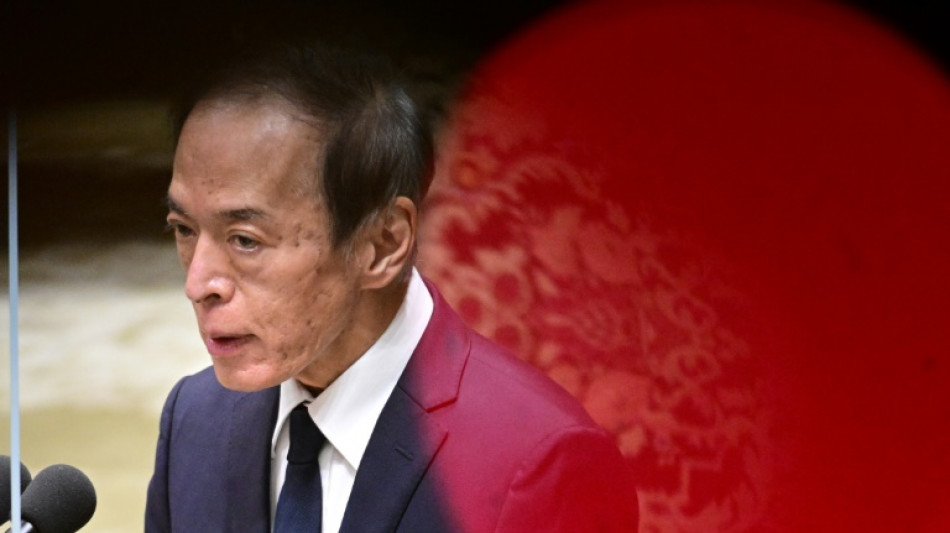
Bank of Japan's next chief says monetary easing 'appropriate' / Photo: Philip FONG - AFP

 British king reflects on colonial atrocities in Guyana

 Monaco taken off global money-laundering 'grey list'
 Tears, fear, anger: relatives of Spain train crash dead await fate
 Wall Street tech rout deepens on doubts over AI spending

 Relatives' anguish grows as Spain identifies train crash dead

 Markets lashed by tech rout as earnings fan AI fears

 Tech sell-off deepens as earnings fan AI fears

 BP net profit quadruples as Mideast war lifts oil prices

 Drugs giant AstraZeneca reveals higher profits, savings plan

 French economy 'headed for a wall' as GDP shrinks

 South Korea to prosecute students cheating with smart glasses

 Shock, vindication, regret: Scientists react to AI roiling life's work

 Britain's King Charles lands in ex-colony Guyana

 Dodging fuel price hikes, Damascus drivers turn to electric cars
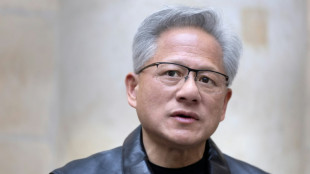
The Bank of Japan's longstanding monetary easing policies are "appropriate", its next governor Kazuo Ueda told parliament on Friday, suggesting no sudden changes to the bank's stance when he takes the helm in April.
Ueda, an economics professor, was nominated last week to replace Haruhiko Kuroda, who is stepping down after a decade in the job.
His nomination is expected to be easily approved in parliament, where the ruling coalition commands a healthy majority.
Under Kuroda, the bank unleashed a raft of extraordinary ultra-loose policies -- from a negative interest rate to spending vast sums on government bonds -- in a bid to boost Japan's sluggish economy.
It has stuck with these measures over the past year, despite pressure to join the US Federal Reserve and other central banks in aggressively hiking interest rates to tackle soaring inflation.
Ueda said Friday he saw the "continuation of monetary easing as appropriate".
"It is necessary to keep monetary easing to support the economy and create an environment where companies can raise wages," he said in his first public address since being nominated by Prime Minister Fumio Kishida.
Government data showed on Friday that Japan's consumer prices rose 4.2 percent year-on-year in January, a level not seen since September 1981.
The figure, which excludes volatile fresh food, is fuelled in part by higher energy bills and is above the BoJ's longstanding two-percent inflation target.
However, because the higher prices are not driven by demand or steady wage increases, the BoJ has said it sees no reason to abandon its easing policies.
Y.Tengku--CPN