
Four-day working week 'more productive': UK study / Photo: Thomas COEX - AFP/File

 British king reflects on colonial atrocities in Guyana

 Monaco taken off global money-laundering 'grey list'

 Tears, fear, anger: relatives of Spain train crash dead await fate

 Wall Street tech rout deepens on doubts over AI spending

 Relatives' anguish grows as Spain identifies train crash dead

 Markets lashed by tech rout as earnings fan AI fears

 Tech sell-off deepens as earnings fan AI fears

 BP net profit quadruples as Mideast war lifts oil prices

 Drugs giant AstraZeneca reveals higher profits, savings plan

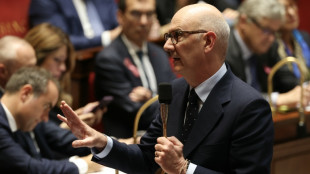 French economy 'headed for a wall' as GDP shrinks

 South Korea to prosecute students cheating with smart glasses

 Shock, vindication, regret: Scientists react to AI roiling life's work

 Britain's King Charles lands in ex-colony Guyana

 Dodging fuel price hikes, Damascus drivers turn to electric cars

 Lethbridge students learn how city transit and transportation systems work

 Horoscope for October 30, 2026: communication and patience shape the day
A four-day working week is more productive for most staff and companies than the traditional five days, one of the biggest trials of its kind conducted in the UK reported on Tuesday.
Over 60 firms in Britain took part in the six-month experiment allowing almost 3,000 employees to work one day less per week while retaining the same salary.
Conducted between last June and December, it was organised by non-profit group 4 Day Week Global alongside the think tank Autonomy, the University of Cambridge and Boston College in the United States.
It has been described as the world's biggest trial of a four-day working week.
The study found more than nine out of ten firms will continue with the shortened working week or plan to do so, organisers said in a statement.
Just four percent will not extend it.
"Results are largely steady across workplaces of varying sizes, demonstrating this is an innovation which works for many types of organisations," said lead researcher and Boston College professor Juliet Schor.
Productivity did not suffer from the lighter working weeks, with company revenue rising 1.4 percent on average over the trial.
Revenue jumped 35 percent on average, when compared with similar periods from previous years.
The study also found that hiring increased and absenteeism dropped -- while the number of staff leaving fell sharply during the trial.
In addition, researchers concluded that the overall health and well-being of employees had improved.
"Significant" increases were observed in physical and mental health, time spent exercising, and overall life and job satisfaction.
Rates of stress, burnout and fatigue all fell, while problems with sleep declined, according to the statement.
- 'Really positive' -
"In terms of employees, their mental health improved, they got better sleep, they got less burnt out," Cambridge University's Professor Brendan Burchell told AFP.
"But at the same time, the companies reported that if there were changes in their profits or their performance, if anything they were more likely to go up rather than down.
"And we got lots of very happy people -- people really enjoyed it; they found it such a reward to have three day weekends instead of two day weekends."
UK environmental consultancy Tyler Grange was among 18 firms to adopt permanently the four-day week after taking part.
"My experience has only been really, really positive -- you can see it in people day-to-day at work, that they're more energized at work," Tyler Grange client director Nathan Jenkinson told AFP.
Employees "come into work at the start of the week on a Monday, having had three days rest, and they're feeling much more positive about work and got a lot more energy".
Tyler Grange reported that turnover increased slightly despite the reduced hours.
In recent years, studies into the four-day working week have spread globally as employers explore post-pandemic flexibility, including the concept of a hybrid workplace that enables more working from home.
Experiments on the shortened week have taken place across Europe, the United States and Canada, as well as in Australia and New Zealand.
However, asked if the UK government might adopt the trial as national policy, Prime Minister Rishi Sunak's spokesman sounded a cautious note, saying there were "no plans for that".
P.Schmidt--CPN