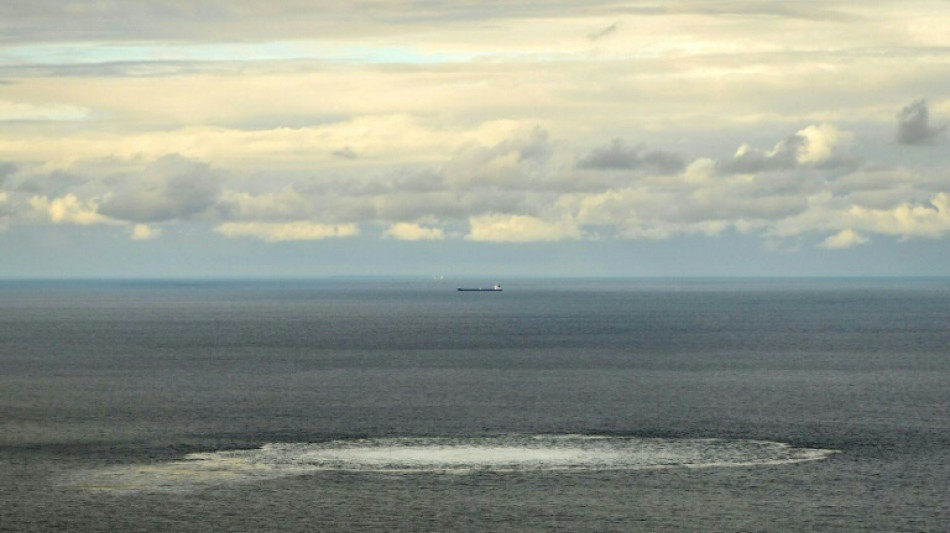
Energy firms not doing enough to cut methane: IEA / Photo: Handout - DANISH DEFENCE/AFP

 British king reflects on colonial atrocities in Guyana

 Monaco taken off global money-laundering 'grey list'
 Tears, fear, anger: relatives of Spain train crash dead await fate
 Wall Street tech rout deepens on doubts over AI spending
 Relatives' anguish grows as Spain identifies train crash dead

 Markets lashed by tech rout as earnings fan AI fears
 Tech sell-off deepens as earnings fan AI fears

 BP net profit quadruples as Mideast war lifts oil prices

 Drugs giant AstraZeneca reveals higher profits, savings plan

 French economy 'headed for a wall' as GDP shrinks
 South Korea to prosecute students cheating with smart glasses
 Shock, vindication, regret: Scientists react to AI roiling life's work

 Britain's King Charles lands in ex-colony Guyana
 Dodging fuel price hikes, Damascus drivers turn to electric cars
 Lethbridge students learn how city transit and transportation systems work

 Horoscope for October 30, 2026: communication and patience shape the day
Oil and gas companies are not doing enough to cut methane emissions, the International Energy Agency (IEA) said Tuesday, despite high energy prices making abatement measures mostly pay for themselves.
In its latest annual Global Methane Tracker report, the IEA found that emissions from the energy sector rose slightly last year to 135 million tonnes, to just below the record set in 2019.
"Our new Global Methane Tracker shows that some progress is being made but that emissions are still far too high and not falling fast enough –- especially as methane cuts are among the cheapest options to limit near-term global warming," said IEA Executive Director Fatih Birol. "There is just no excuse."
Methane is responsible for around 30 percent of the rise in global temperatures since the Industrial Revolution. As it has a faster and more powerful impact than carbon dioxide reductions, methane emissions may prove the best way to limit short-term global warming and rapidly improve air quality.
The energy sector accounts for around 40 percent of total methane emissions attributable to human activity, second only to agriculture, and cost-effective solutions are available.
"We estimate that around 70 percent of methane emissions from fossil fuel operations could be reduced with existing technology," the IEA said in the report.
While fossil fuel operations are reducing the amount of methane emitted per unit of energy and leaks into the atmosphere, overall emissions are still rising.
- Self-financing -
This despite steps to reduce emissions which largely pay for themselves.
"Based on the record gas prices seen around the world in 2022, we estimate that about 80 percent of the options to reduce emissions from oil and gas operations worldwide could be implemented at no net cost," said the IEA.
The IEA estimates that $100 billion -- less than three percent of the income of oil and gas companies worldwide last year -- would be enough to achieve a 75 percent reduction in methane emissions.
Meanwhile, the IEA said the most impactful measure countries can take to rein in emissions is stopping all non-emergency flaring and venting of methane.
The IEA also noted that the explosions last year which destroyed the Nord Stream pipelines that carried Russian natural gas to Germany released a huge amount of methane into the atmosphere.
"But normal oil and gas operations around the world release the same amount of methane as the Nord Stream explosion every single day," it added.
The increased emissions come despite 150 countries having now joined the Global Methane Pledge to reduce methane emissions from human activity by 30 percent from 2020 levels by 2030.
The IEA believes that methane emissions from the fossil fuel sector need to drop by 75 percent by 2030 to reach net zero by 2050, the target seen as giving a chance at keeping the mean increase in global temperature at well below two degrees Celsius as enshrined in the 2015 Paris Climate Accords.
X.Wong--CPN