
Covid infection gives similar immunity to vaccination: study / Photo: Jung Yeon-je - AFP/File

 British king reflects on colonial atrocities in Guyana

 Monaco taken off global money-laundering 'grey list'

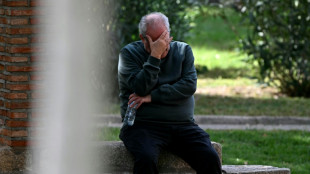 Tears, fear, anger: relatives of Spain train crash dead await fate

 Wall Street tech rout deepens on doubts over AI spending

 Relatives' anguish grows as Spain identifies train crash dead

 Markets lashed by tech rout as earnings fan AI fears

 Tech sell-off deepens as earnings fan AI fears
 BP net profit quadruples as Mideast war lifts oil prices

 Drugs giant AstraZeneca reveals higher profits, savings plan

 French economy 'headed for a wall' as GDP shrinks

 South Korea to prosecute students cheating with smart glasses

 Shock, vindication, regret: Scientists react to AI roiling life's work

 Britain's King Charles lands in ex-colony Guyana

 Dodging fuel price hikes, Damascus drivers turn to electric cars

 Lethbridge students learn how city transit and transportation systems work

 Horoscope for October 30, 2026: communication and patience shape the day
The protection against Covid-19 from being previously infected lasts at least as long as that offered by vaccination, one of the largest studies conducted on the subject said on Friday.
Ten months after getting Covid, people still had an 88 percent lower risk of reinfection, hospitalisation and death, according to the study published in the Lancet journal.
That makes this natural immunity "at least as durable, if not more so" than two doses of Pfizer or Moderna's vaccines, the study said.
The authors nevertheless emphasised that their findings should not discourage vaccination, which remains the safest way to get immunity.
The study, led by the US-based Institute for Health Metrics and Evaluation (IHME), said it was the most comprehensive analysis on how long protection lasts for the different forms of immunity.
The researchers reviewed 65 studies from 19 countries up to September 2022, meaning some covered the period when Omicron swept across the world.
Omicron proved to be more contagious than previous strains, but less severe.
People with natural immunity from a pre-Omicron variant saw their protection against reinfection wear off much more quickly for the early Omicron strains, dropping to 36 percent after 10 months, the study said.
"Vaccines continue to be important for everyone in order to protect high-risk populations such as those who are over 60 years of age and those with comorbidities," study co-author Caroline Stein of the IHME said in a statement.
The study also gives a more accurate picture of what Covid might look like in the future, as more vaccinated people are reinfected, acquiring "hybrid immunity".
"In the long run, most infections will occur in people with strong protection against severe disease because of previous infection, vaccination, or both," said Cheryl Cohen, an epidemiologist at South Africa's National Institute for Communicable Diseases.
"These results suggests that, similar to other human coronaviruses, there might be a low seasonal hospitalisation burden" associated with Covid, Cohen said in a Lancet commentary.
C.Peyronnet--CPN