Renault-Nissan: key moments in a rocky alliance / Photo: Kazuhiro NOGI - AFP/File

 EU and Canada to 'withstand shocks together' with new alliance

 'Life in the old dog': German economy grows more than expected

 Italy inflation surges to 5.4% as economy stalls
 US oil giants report profit surge again on Iran war
 Carmaker Audi cuts outlook again on China, US woes
 German economy logs 0.2% growth, faster than expected
 China denies spying on Nvidia's Jensen Huang
 BP net profit quadruples on higher oil prices

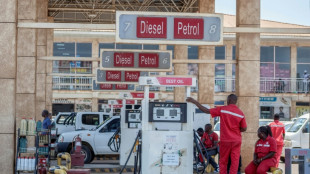 Malawi's fuel shortages, record prices deepen economic crisis

 The Duskbloods delayed as Nintendo Switch 2 release moves to 2027
 Tech firms take fresh hit as earnings misses fan AI fears
 Nvidia's web of AI bets: smart strategy or bubble risk?

 DoorDash shares rise as Instacart slips following $17 billion takeover plan

 Amazon cloud business accelerates but shares drop on profit miss

 PI Industries plans Indian launch of Pioxaniliprole insecticide this rabi season
 Asian equities diverge after mixed technology earnings and Fed rate decision
 Kuwait traffic authority cautions against hazard lights while driving in rain
 Utah files criminal charges against prediction market Kalshi
 Kuwait National Guard official visits member injured during training

 CNN Global Perspectives prepares Doha debut with international speaker lineup

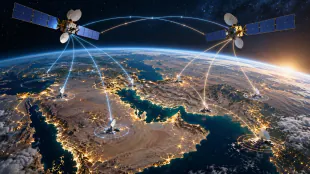 Es’hailSat and Arabsat agree broader satellite and broadcasting cooperation

In the decades since Renault rescued Nissan from bankruptcy, their union has brought strength but also friction, heightened by the 2018 arrest of alliance head Carlos Ghosn.
As the French and Japanese auto giants announce a major reshaping of their partnership, here is a recap of key events:
- 1999: Franco-Japan union -
In March 1999, Renault comes to the rescue of heavily indebted Nissan, which needs a partner in order to survive.
Under a deal signed in Tokyo, the French firm takes nearly 37 percent of its Japanese rival.
Later that year, Renault number two Ghosn unveils a recovery plan for Nissan, including 21,000 job losses.
- 2002: Cross-shareholding -
As the two companies cooperate on distribution, purchasing and manufacturing, their alliance starts to bear fruit.
A recovering Nissan takes a 15 percent share in Renault in 2002, and the pair set up a joint management structure.
Renault ups its stake in Nissan to more than 44 percent, which is later trimmed to around 43 percent.
By 2003, Nissan has become the world's second-biggest carmaker by market capitalisation, and in 2005 Ghosn takes the reins of both firms.
- 2015-16: Tensions erupt, alliance expands -
Tensions erupt in 2015. Nissan is angry that the French state's stake in Renault's capital has been increased to nearly 20 percent (it has since dropped back to 15 percent).
But they reach an accord that caps the French government's ability to interfere in the alliance's affairs.
The group expands in 2016 to include struggling carmaker Mitsubishi Motors, with Nissan acquiring around a third of its Japanese rival.
In 2017, Ghosn cedes the post of Nissan CEO to Hiroto Saikawa, but remains chief of Renault and the three-way partnership.
That year, the alliance claims the title of the world's top-selling auto company -- ahead of Toyota and neck-and-neck with Volkswagen.
- 2018: Ghosn arrested -
Ghosn is arrested in November 2018 on financial misconduct charges.
He is held in custody in Tokyo, and replaced at all three companies as the alliance reels.
In July 2019, crisis-hit Nissan says quarterly net profit plunged nearly 95 percent and announces 12,500 job cuts.
That September, the Japanese firm announces Saikawa's departure after he admitted to receiving excess pay by altering the terms of a bonus. The next month Nissan names a new CEO, Makoto Uchida, who is seen as more pro-alliance.
- 2019-20: Ghosn escape, Covid-19 -
In the last days of 2019, Ghosn jumps bail and escapes from Japan hidden in an audio-equipment box, landing in Beirut.
Soon, the Covid-19 pandemic pushes the Ghosn controversy off centre stage and brings fresh economic mayhem to the alliance, paralysing production lines.
In May 2020, Renault-Nissan-Mitsubishi unveil a plan to deepen their cooperation, planning to develop nearly half of cars jointly.
- 2022: Focus on electric vehicles -
In January 2022, the alliance announces it will invest 23 billion euros ($22 billion) into electric vehicles over five years, working together on manufacturing platforms.
Just weeks later, it emerges that Renault wants to split its electric vehicle and combustion engine businesses -- kicking off negotiations about the union's future.
In May, with war raging in Ukraine, Renault quits the Russian market, pushing the French carmaker deep into the red after the woes of Covid-19.
- 2023: Alliance rebalanced -
The companies announce in January that Renault will slash its stake in partner Nissan as part of a deal to rebalance their alliance.
Renault will reduce its share in Nissan to 15 percent, the same size as Nissan's stake in its French counterpart, and the Japanese company will also invest in Renault's new EV business Ampere.
The agreement, which follows months of painstaking negotiations, is expected to be signed later in the month, following board approval on both sides.
burs-kaf/sah/aha
S.F.Lacroix--CPN