
EU dangles visa threat over nations refusing to take back migrants / Photo: Sakis MITROLIDIS - AFP

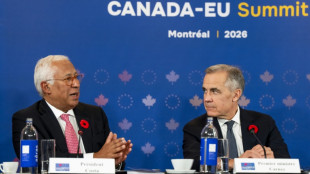 EU and Canada to 'withstand shocks together' with new alliance

 'Life in the old dog': German economy grows more than expected

 Italy inflation surges to 5.4% as economy stalls

 US oil giants report profit surge again on Iran war

 Carmaker Audi cuts outlook again on China, US woes

 German economy logs 0.2% growth, faster than expected

 China denies spying on Nvidia's Jensen Huang
 BP net profit quadruples on higher oil prices

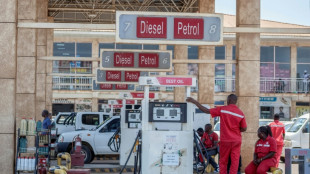 Malawi's fuel shortages, record prices deepen economic crisis

 The Duskbloods delayed as Nintendo Switch 2 release moves to 2027

 Tech firms take fresh hit as earnings misses fan AI fears

 Nvidia's web of AI bets: smart strategy or bubble risk?

 DoorDash shares rise as Instacart slips following $17 billion takeover plan

 Amazon cloud business accelerates but shares drop on profit miss

 PI Industries plans Indian launch of Pioxaniliprole insecticide this rabi season

 Asian equities diverge after mixed technology earnings and Fed rate decision

 Kuwait traffic authority cautions against hazard lights while driving in rain
 Utah files criminal charges against prediction market Kalshi
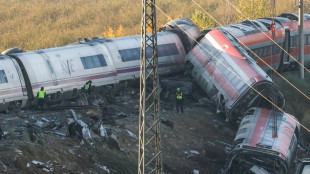
 Kuwait National Guard official visits member injured during training

 CNN Global Perspectives prepares Doha debut with international speaker lineup

 Es’hailSat and Arabsat agree broader satellite and broadcasting cooperation

EU interior ministers reached "consensus" Thursday to warn outside countries refusing to take back irregular migrants they risked tighter visa restrictions to Europe, Sweden's migration minister said.
Ministers agreed that the tool, in place since 2020, "should be fully used" to boost the number of migrants returning to their home countries after their asylum applications failed, Maria Malmer Stenergard told journalists.
Sweden chaired the Stockholm meeting as it currently holds the EU presidency.
"Should intensified political and diplomatic efforts not produce the desired results, member states call on the (European) Commission to come back to the (European) Council with proposals on visa restrictions," Malmer Stenergard said.
That tougher line was reflected in a letter Commission chief Ursula von der Leyen sent to leaders of EU countries on Thursday, ahead of a February 9-10 summit that will discuss the issue.
Von der Leyen said EU member states could sign up to a pilot scheme over the first half of this year to speed up screening and asylum procedures for eligible migrants -- and "immediate return" for those not deemed to qualify.
She also said she wanted the EU to draw up a list of "safe countries of origin", and for the bloc to strengthen border monitoring on the Mediterranean and Western Balkans routes migrants use to get to Europe.
- 'Huge pressure' -
The EU planned to put in place migration deals with countries such as Bangladesh, Pakistan, Egypt, Morocco, Tunisia and Nigeria "to improve returns... and to prevent departures", said Von der Leyen.
In Stockholm, EU home affairs commissioner Ylva Johansson stressed that many European Union countries were under "huge pressure", receiving nearly one million asylum applications last year.
Capacity was further stretched by the EU hosting nearly four million Ukrainian refugees who had fled Russia's war in their country, she said.
European Commission statistics show a low rate of effective returns.
In 2021, out of 340,500 orders for migrants to be returned to their countries of origin, only 21 percent were carried out.
The EU funds various reintegration programmes in countries that readmit their citizens who have been denied asylum in Europe.
These are separate from deportations or forced returns based on a court or administrative order, which are often carried out under escort and typically do not include in-country assistance.
Sweden -- whose government relies on a far-right party, the Sweden Democrats, to stay in power -- wants EU countries to leverage visas, foreign policy and development aid to press outside countries on the returns issue.
- Harder stance -
So far, the EU has applied the visa-restriction tool against only one country: The Gambia, for whose citizens getting a Schengen visa is more difficult and costly.
The commission in 2021 proposed the mechanism be extended to Bangladesh and Iraq, but that has not happened.
Johansson said after a November visit to Bangladesh that the threat of the visa sanctions had prompted Dhaka to become more "politically open" to accepting irregular migrants back from Europe.
The overall tone on migration has hardened in Europe since 2015-2016, when it took in over a million asylum-seekers, most of them Syrians fleeing the war in their country.
The bloc in 2016 struck a deal with Turkey to prevent much of the onward passage of irregular migrants into Europe.
Austria backs the strengthening of a fence built along the border of EU member Bulgaria with Turkey to further reduce the flow of asylum-seekers.
Austrian Chancellor Karl Nehammer said on Monday, during a visit to that border region, that the fence would cost around two billion euros, and called on the European Commission to fund it.
The commission has been reluctant to do that, emphasising instead the role of Frontex, the bloc's border patrol agency, which EU member states can call on.
"It's about strengthening the fence that is there," Nehammer told reporters in Vienna on Thursday.
"The commission categorically says, 'No, there is no money for fences'. That can't be the final word" on this issue, he added.
The current system to manage asylum and the visa-free Schengen zone had failed, he insisted.
Johansson said she objected to the fence proposal on financial grounds, pointing out that the European Council representing member states had cut her department's budget for the 2021-2027 cycle.
U.Ndiaye--CPN