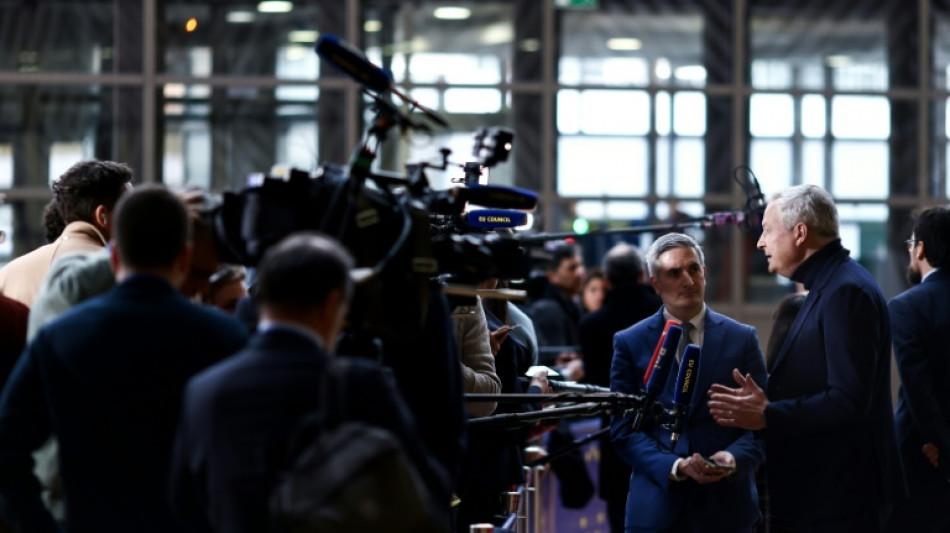
EU vows to protect European industry to counter US subsidies / Photo: Kenzo TRIBOUILLARD - AFP

 US oil giants report profit surge again on Iran war
 Carmaker Audi cuts outlook again on China, US woes
 German economy logs 0.2% growth, faster than expected
 China denies spying on Nvidia's Jensen Huang
 BP net profit quadruples on higher oil prices
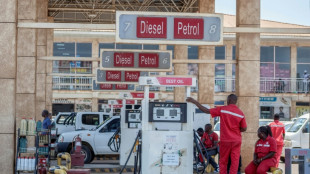 Malawi's fuel shortages, record prices deepen economic crisis

 The Duskbloods delayed as Nintendo Switch 2 release moves to 2027
 Tech firms take fresh hit as earnings misses fan AI fears
 Nvidia's web of AI bets: smart strategy or bubble risk?

 DoorDash shares rise as Instacart slips following $17 billion takeover plan

 Amazon cloud business accelerates but shares drop on profit miss

 PI Industries plans Indian launch of Pioxaniliprole insecticide this rabi season

 Asian equities diverge after mixed technology earnings and Fed rate decision
 Kuwait traffic authority cautions against hazard lights while driving in rain
 Utah files criminal charges against prediction market Kalshi

 Kuwait National Guard official visits member injured during training

 CNN Global Perspectives prepares Doha debut with international speaker lineup

 Es’hailSat and Arabsat agree broader satellite and broadcasting cooperation

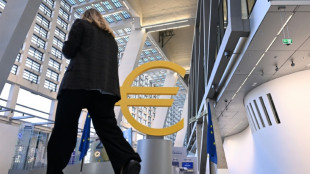 ECB says has tools to calm markets as French debt worries rise
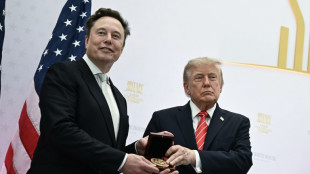
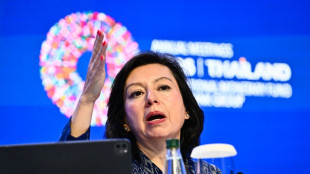 IMF says engaging with Iraq on preparing new bailout program
 US economy posts strong growth, inflation stubbornly high in challenge to Trump
The EU on Monday said it would take "decisive steps" to protect Europe in the face of massive US subsidies that have left the bloc scrambling to find a way to keep businesses on the continent.
Last year, Washington passed the landmark Inflation Reduction Act (IRA) that contains around $370 billion in subsidies for green energy, as well as tax cuts for US-made electric cars and batteries, to speed up the transition to a low-carbon economy.
EU countries have poured criticism on the IRA, seeing the "Buy American" domestic production requirement as a threat to European jobs, especially in the energy and auto sectors.
But the bloc's members are divided over how to respond, with some, including France, calling for Europe to bring in its own substantial subsidy scheme.
The EU would take "decisive steps to safeguard European competitiveness, streamlining our state aid rules while avoiding fragmentation in the single market, including through the establishment of a European sovereignty fund" to support members, the bloc's economy commissioner, Paolo Gentiloni, said during a press conference.
European Commission President Ursula von der Leyen has previously proposed a new EU fund to support Europe's green transition.
But Gentiloni made it clear a common fund would take time, it "will not be tomorrow".
EU nations hope to agree on a way forward before a summit next month in a bid to avoid European businesses rushing to invest in the United States where energy is cheaper.
Europe has been hit hard by high energy prices after Russia's war in Ukraine.
"There is no time to lose in establishing a new European industrial policy to support green industry and encourage industries to relocate to European territory," French Finance Minister Bruno Le Maire said before talks between the EU's finance ministers.
He called for a "simplification shock" to the state aid framework in Europe as well as larger subsidies for sectors including hydrogen, electric batteries, solar panels and semiconductors.
Some EU members fear a hardline response by the EU to the IRA could provoke a trade war, while others worry a subsidy race within the bloc would benefit wealthier nations.
"I think it's important we respect the single market in all aspects," Irish Finance Minister Michael McGrath said earlier on Monday. "The state aid rules... are there to ensure that there is a level playing field."
- Calls for new fund -
Talks began late last year between the United States and the EU to resolve tensions.
But Brussels has failed to persuade US President Joe Biden to alter contentious parts of the act, with Washington only promising to make tweaks.
In a letter sent to EU ministers dated January 13, European Commission vice president Margrethe Vestager warned that not all EU countries "have the same fiscal space for state aid. That's a fact. And a risk for the integrity of Europe".
According to Vestager, Germany accounted for 53 percent of state subsidies approved under a "temporary" mechanism, while France represented around 24 percent and Italy over seven percent.
European Council President Charles Michel threw his support for a sovereignty fund and state aid reform in an opinion piece for Politico published on Sunday.
"Shoring up support for strategic industrial companies and small and medium-sized enterprises means reforming, or at least making our state aid rules fit for today's economic and geopolitical realities," he wrote.
H.Meyer--CPN