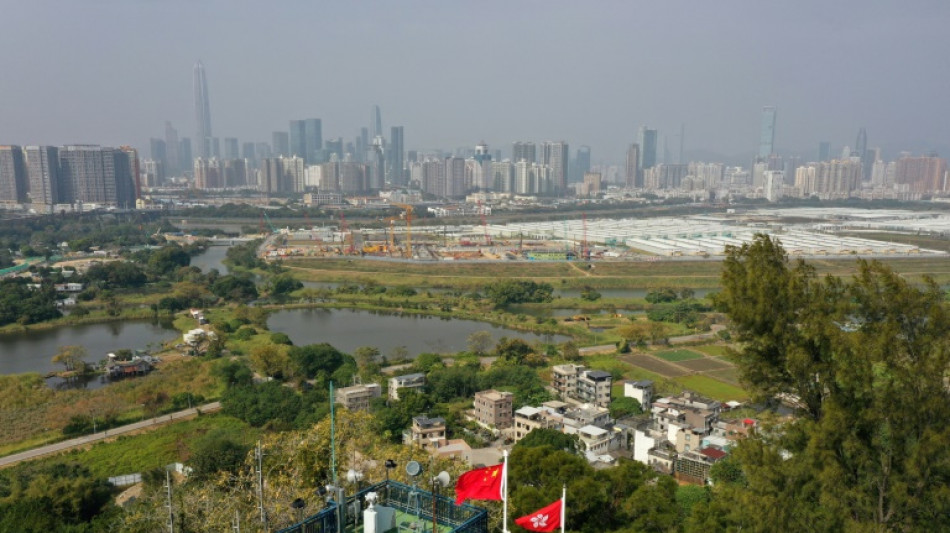
Hong Kongers await border reopening with mixed feelings / Photo: Peter PARKS - AFP

 German economy logs 0.2% growth, faster than expected

 China denies spying on Nvidia's Jensen Huang
 BP net profit quadruples on higher oil prices
 Malawi's fuel shortages, record prices deepen economic crisis

 The Duskbloods delayed as Nintendo Switch 2 release moves to 2027
 Tech firms take fresh hit as earnings misses fan AI fears
 Nvidia's web of AI bets: smart strategy or bubble risk?
 DoorDash shares rise as Instacart slips following $17 billion takeover plan

 Amazon cloud business accelerates but shares drop on profit miss

 PI Industries plans Indian launch of Pioxaniliprole insecticide this rabi season
 Asian equities diverge after mixed technology earnings and Fed rate decision
 Kuwait traffic authority cautions against hazard lights while driving in rain
 Utah files criminal charges against prediction market Kalshi
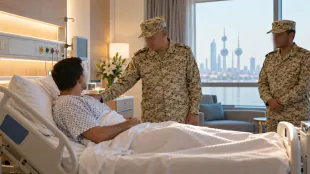 Kuwait National Guard official visits member injured during training
 CNN Global Perspectives prepares Doha debut with international speaker lineup

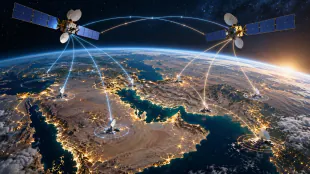 Es’hailSat and Arabsat agree broader satellite and broadcasting cooperation

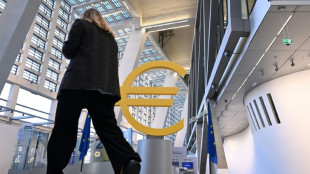
 ECB says has tools to calm markets as French debt worries rise
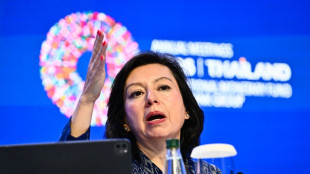 IMF says engaging with Iraq on preparing new bailout program
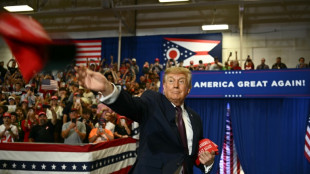 US economy posts strong growth, inflation stubbornly high in challenge to Trump
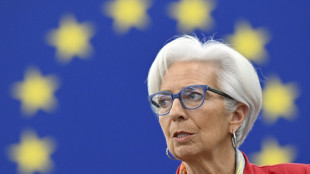
 French businessman takes over 2030 Winter Olympics amid leadership turmoil
 Stock markets diverge on corporate earnings, tech jitters
Shanghai engineer Roy Wang has a pressing task now that the border between Hong Kong and the Chinese mainland is being reopened -- rekindling his long-distance relationship after a painful separation.
"There were so many quarrels with my girlfriend. It was really miserable to handle," Wang, 23, told AFP on Wednesday.
His wish to visit her was granted the very next day.
Authorities announced that widespread travel between Hong Kong and mainland China would resume from Sunday, initially allowing about 60,000 people a day to cross in each direction.
Those measures are a game-changer for many after the border was effectively sealed for nearly three years during the coronavirus pandemic, separating loved ones, cutting off tourism and severing most business travel.
"I feel so relieved," Wang said after he heard the news. "After waiting for so long, even though the process is very hard, the result is satisfying."
Hong Kong's recession-hit economy is desperate to reconnect with its biggest source of growth, and families are looking forward to reunions over the Chinese New Year later this month.
Within a day of the new rules being announced, more than 280,000 Hong Kongers registered to go to the mainland.
But not everyone in Hong Kong shares the excitement.
- Hospitals under pressure -
Some worry about a potential surge of patients for Hong Kong's already stretched hospitals and competition for medical supplies in one of the world's most densely populated cities.
Others are reluctant to bid farewell to a less crowded life.
And some fear a resurgence of animosity towards mainlanders that was a partial catalyst for the huge, now crushed, democracy protests that convulsed Hong Kong in 2019.
The reopening of the border comes as China faces soaring coronavirus infections after suddenly abandoning its strict zero-Covid strategy.
Hong Kong is also experiencing a winter uptick, with daily Covid hospitalisations rising from 3,000 to more than 5,300 in December and a bed occupancy rate of up to 120 percent.
"I find it quite interesting that the authorities chose to reopen the border now, when the outbreak in the mainland is on the rise," a public hospital doctor who requested anonymity told AFP.
Siddharth Sridhar, a clinical virologist at the University of Hong Kong, said the healthcare system was largely coping despite increased pressure.
"One of the reasons... is that the local population has high levels of hybrid immunity," Sridhar told AFP.
In recent weeks, pharmacy shelves have been cleared of paracetamol and fever medication after Hong Kongers bought up supplies for relatives on the mainland.
Some private hospitals have begun advertising deals to sell western mRNA vaccine shots that China has yet to approve for the mainland.
Hong Kong's government has vowed that the hospital and vaccine system will not be upended by the border reopening.
On Thursday, health minister Lo Chung-mau said visitors would not be able to access the city's free vaccination scheme although private hospitals were free to sell shots.
Infected visitors will have to pay to use public hospitals and medical supplies have been stockpiled, he added.
- Business boom -
Hong Kong businesses are revelling in the prospect of a much-needed influx of new arrivals.
Mainlanders have long made up the vast majority of visitors to Hong Kong, with some 51 million arriving in 2018, nearly seven times Hong Kong's total population.
Their absence has hammered the local economy, especially the once-vibrant tourism and retail sectors.
Parts of Hong Kong that once thronged with luxury goods stores aimed at mainland shoppers are now filled with vacant shop fronts while commercial rents have cratered.
"2023 -- fight for recovery," Perry Yiu, a city lawmaker representing the tourism sector, wrote in a social media message this week.
University researcher Grace Cao said she welcomed the economic boost but was also bracing herself to return to life in a city filled with crowds.
"I worry that the conflicts between local people and mainland people will return and worsen, especially now that Hong Kong does not have as much space for speech and expression as it used to," she told AFP.
Local anger over competition with mainlanders and runaway tourism helped fuel democracy protests in 2019.
Beijing neutered that movement with a sweeping national security law that criminalised most dissent.
Eric Chan, a mainlander working in Hong Kong's finance industry, said his adopted city was very different compared to before the pandemic.
Border closures and travel restrictions had been combined with "the government restricting people's fundamental rights", he said, asking to use a pseudonym.
"What the government is doing now is relaxing some anti-Covid measures, but those rights won't recover to the level they used to be," he said.
A.Mykhailo--CPN
