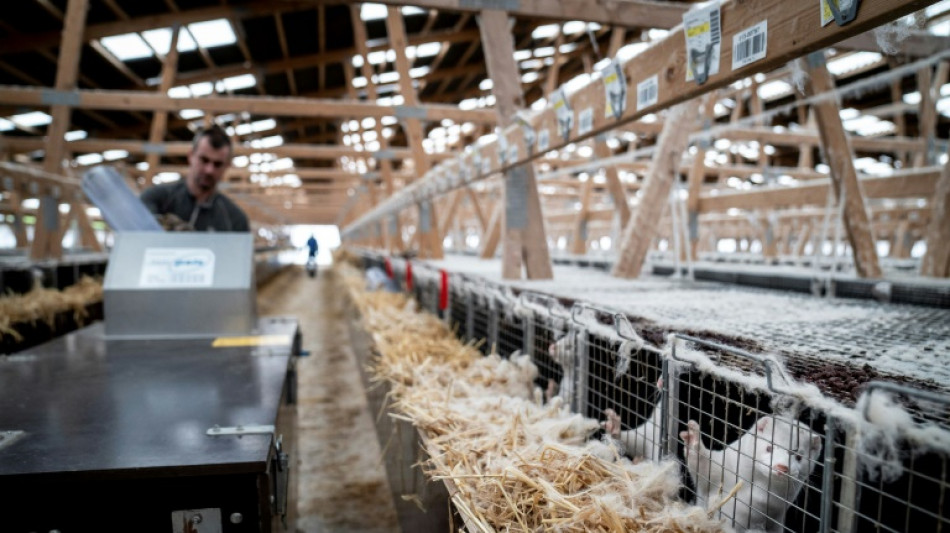
After Covid cull, Danish mink farmers find new careers / Photo: MADS CLAUS RASMUSSEN - Ritzau Scanpix/AFP/File

 French economy 'headed for a wall' as GDP shrinks

 South Korea to prosecute students cheating with smart glasses
 Shock, vindication, regret: Scientists react to AI roiling life's work

 Britain's King Charles lands in ex-colony Guyana
 Dodging fuel price hikes, Damascus drivers turn to electric cars
 Lethbridge students learn how city transit and transportation systems work

 Horoscope for October 30, 2026: communication and patience shape the day

 Inkle buys Finally bookkeeping unit and expands India-based workforce
 ISRO schedules NVS-03 navigation satellite launch for Friday

 'Star Trek', 'X-Men' star Patrick Stewart dead at 86

 Canada buying stake in AI firm Cohere to bolster tech sovereignty
 Grieving Spain demands answers for latest rail disaster

 Qatar prime minister tours Cityscape Qatar 2026

 Jazeera Paints showcases housing solutions at Build Your House 2026 in Qatar
 Google drags down Wall Street stocks
 Does White House ask AI to shape policy? Democrats want the receipts
 ECB holds rates steady after Lagarde says to quit early

 ECB chief Lagarde to step down early, triggering succession race

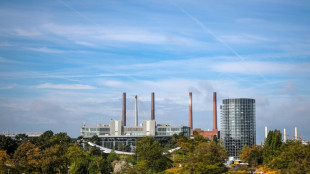 VW says 'no time to lose' to slash costs after 5.8 billion euro loss

 Oil majors reap bumper profits as Mideast war drives prices
Reinventing himself as a brewer at age 62 would never have occurred to Poul Erik Vestergaard, but Denmark's controversial cull of the country's minks over Covid fears forced him to change course.
Authorities ordered the slaughter of the Nordic country's farmed mink population in November 2020 following the discovery of a mutated strain of the coronavirus.
After a two-year ban, Denmark will once again allow mink farming from January 2023.
But for Vestergaard, his mink-raising days are over.
"The farm can be used for other things. That's my view. It's over now. It just has to go," the veteran farmer tells AFP at a 100-hectare (247-acre) farm that will become a microbrewery.
Most of the some 1,000 farms in the Scandinavian country, once the world's leading exporter of mink fur, have made the same choice, leaving "ghost farms" across the plains of western Denmark, where the husbandry was focused.
As he walks through the now empty buildings -- facilities that must be kept intact until the state has assessed their exact value -- the former farmer says he isn't bitter.
In 1986, he bought his father's farm -- then dominated by dairy cows -- and started breeding minks with 50 females until the business prospered with the help of his son, who joined him in 2006.
He had planned to gradually pass the torch.
That was until Denmark imposed a nationwide cull of the animals, over fears of a mutated coronavirus strain that was believed to jeopardise the effectiveness of vaccines.
It later emerged that the government lacked the legal mandate to demand the cull, causing a political scandal from which the country is still rearing from.
With no cases among his minks, Vestergaard was able to sell all his furs. But faced with his business disappearing overnight, the Danish farmer found himself at a loss.
Martin, his son, returned to his job as an electrician, while exploring his passion for beer, brewing in his kitchen with a childhood friend, Thomas.
"They had this hobby, and they were close to taking it to the next level," the former breeder explains.
"It's going to be exciting: a new chapter," he says.
They received grants totalling one million Danish kronor ($143,000) to convert their mink farm into a new business.
- Brewing, baking and strawberries -
Out of 200 applicants, about 60 entrepreneurs have received similar grants under a programme set up by the local government in Jutland in western Denmark.
Others are pursuing baking, farming strawberries or setting up farms dedicated to education.
"It's actually a very popular scheme," says Bent Mikkelsen, who is in charge of the plan set up by the Midtjylland region.
He estimates that today all the former farmers who have not retired are working again, describing them as a very "entrepreneurial group".
Together with their partner Thomas Jeppesen, Poul Erik and Martin have bought nine mahogany barrels along with the equipment necessary to set up a microbrewery.
"In the spring, we will start up the brewery," says Jeppesen, who works in IT.
"The plan is Martin and me will make the brew. After that, Poul Erik will bottle it and put labels around the bottles," he explains.
To keep up with costs with the recent spike in electricity prices, they plan to install solar panels once they receive their compensation.
And for the time being, a return to mink farming is out of the question.
"I don't believe that the government is going to let it grow up again," Martin says.
- Mink holdouts -
A handful of enthusiasts, however, intend to resume breeding in the country, which was a world heavyweight, along with China, in a sector reviled by animal rights activists.
One of the farmers has already bought about 2,000 minks, but it will be a slow and difficult start to rebuild, according to industry representatives.
"For the first one or two years, no cashflow is to be expected," Simonsen says. "But it is a heartfelt work for them."
Ch.Lefebvre--CPN