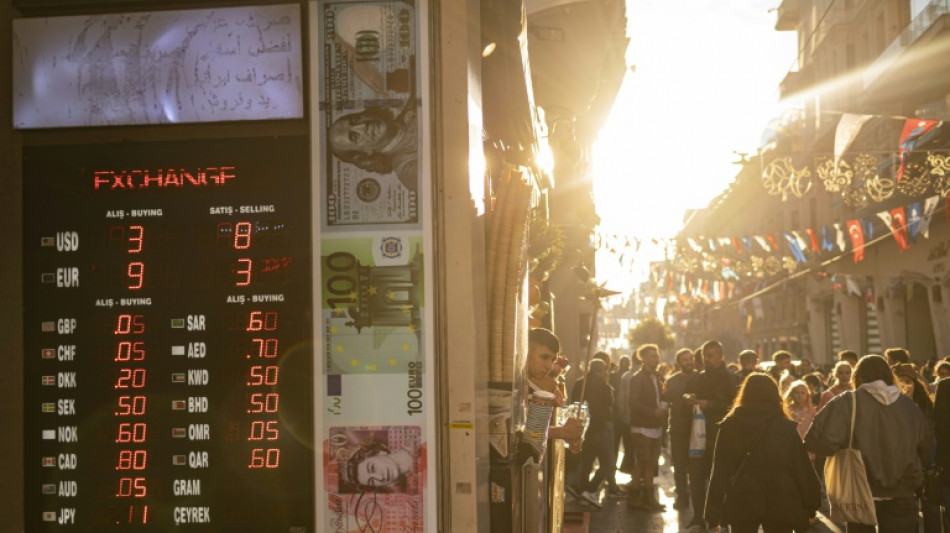
Turkey hikes minimum wages for third time to cushion inflation / Photo: Yasin AKGUL - AFP

 French economy 'headed for a wall' as GDP shrinks
 South Korea to prosecute students cheating with smart glasses
 Shock, vindication, regret: Scientists react to AI roiling life's work

 Britain's King Charles lands in ex-colony Guyana

 Dodging fuel price hikes, Damascus drivers turn to electric cars

 Lethbridge students learn how city transit and transportation systems work

 Horoscope for October 30, 2026: communication and patience shape the day

 Inkle buys Finally bookkeeping unit and expands India-based workforce

 ISRO schedules NVS-03 navigation satellite launch for Friday

 'Star Trek', 'X-Men' star Patrick Stewart dead at 86

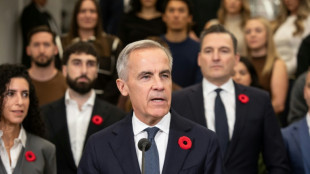 Canada buying stake in AI firm Cohere to bolster tech sovereignty

 Grieving Spain demands answers for latest rail disaster

 Qatar prime minister tours Cityscape Qatar 2026

 Jazeera Paints showcases housing solutions at Build Your House 2026 in Qatar

 Google drags down Wall Street stocks
 Does White House ask AI to shape policy? Democrats want the receipts
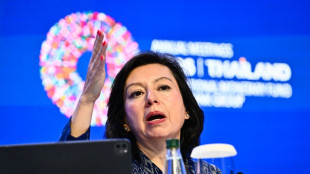
 ECB holds rates steady after Lagarde says to quit early

 ECB chief Lagarde to step down early, triggering succession race

 VW says 'no time to lose' to slash costs after 5.8 billion euro loss

 Oil majors reap bumper profits as Mideast war drives prices
Turkish President Recep Tayyip Erdogan on Thursday announced the third major minimum wage hike in a year to try and cushion the impact of a historic jump in consumer prices ahead of crunch elections.
More than 40 percent of Turkey's workforce earns the lowest income allowed by law.
Erdogan relied on support from the working classes to rise to power nearly two decades ago -- and will need it again to secure re-election in polls which are due by next June.
But Turkey's poor have been hit the hardest by an economic crisis that has seen the official annual inflation rate reach 85 percent.
On Thursday the Turkish leader said the country would boost the monthly take-home pay to a minimum of 8,500 liras ($455).
The minimum wage stood at 2,826 liras in December 2021.
It was raised to 4,253 liras last January and then to 5,500 in July.
But an accompanying plunge in the lira's value means that the wage has been raised only fractionally in dollar terms in the past year.
- 'Unsustainable' -
Turkey's latest economic crisis started when Erdogan -- a lifelong opponent of high interest rates -- pressured the central bank to bring down chronically high consumer prices by lowering borrowing costs.
Conventional economic theory urges policymakers to fight inflation by curbing demand and raising the price of doing business through higher interest rates.
Erdogan's approach set off a currency crisis that saw the lira lose nearly half its value in a matter of weeks late last year.
The government has responded by spending its reserves on currency support measures and imposing complex economic rules aimed at bringing inflation under control.
Erdogan promised on Thursday that inflation will slow to 20 percent by the end of next year.
"We will witness a rapid decline of inflation rates starting this month," he said in televised remarks.
Analysts expect inflation to start falling sharply because the data will be compared to readings from a period 12 months ago when prices were soaring at breakneck pace.
But they also think it will remain substantially elevated until Erdogan either reserves course or a new government embraces economic orthodoxy.
The central bank on Thursday showed no signs of comprise by keeping its benchmark interest rate at nine percent.
Turkey's official inflation reading of 84.39 percent means that banks lose 75.39 percent of a loan's value if they lend money for a year at the official interest rate.
This threatens to cripple lending and dramatically slow economic growth.
"Economic growth will continue to slow in the first half of next year, and it's very possible that President Erdogan puts pressure on the (central bank) to loosen policy even more ahead of next year's election," Nicholas Farr of Capital Economics wrote in a note to clients.
Attempts to force Turkish exporters to sell dollars "and foreign financing have helped stabilise the currency in recent months, but this is unsustainable and we are forecasting it to fall by around 20 percent against the dollar by end-2023," Farr said.
A.Levy--CPN