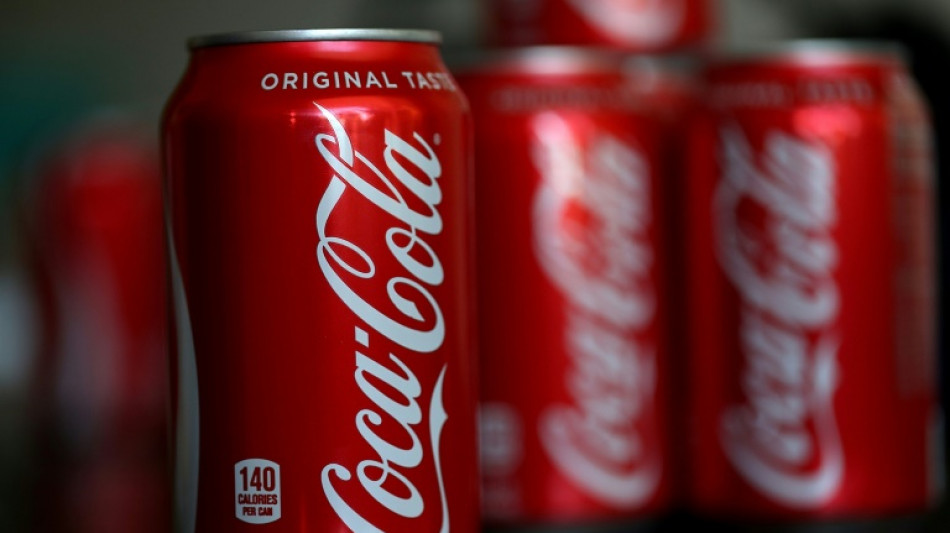
'Coca' pits indigenous Colombians against soft drink giant

 اليورو يستقر في البنوك المصرية وأعلى سعر للبيع 59.85 جنيه

 الأرصاد السعودية تتوقع سيولاً وأمطاراً رعدية في خمس مناطق

 Lights out in Laos as electricity exports surge

 Steven Strogatz weighs AI mathematics advances and their consequences for researchers

 Anthropic boss calls for AI slowdown, Altman and Musk agree

 French IT giant Capgemini sells subsidiary after row over ICE links

 Quebec Brokerage Qubit Insurance Announces New Data on Coverage Shortfalls as Rebuilding Costs Rise

 Lady Gaga welcomes first child with fiance: US media

 Bhutan business bets on hazelnuts for farming future

 'Widow's Bay' and 'The Pitt' are favorites for Emmys night

 Coastal erosion forces cancellation of California music festival

 Argentina's Dirty War rears its head in Venice film

 UK lawmakers throw out bill to legalise assisted dying

 US inflation steady in August, fueling Fed rate hike expectations

 New York marks 25th anniversary of 9/11 attacks

 Nepal flood reconstruction bill to be $4.78 bn: foreign ministry

 JUMO and Standard Bank launch Social Finance Framework to scale inclusive finance in Africa

 Doomsday tech: could AI really kill us all?

 French comedy show 'Call my agent' makes film comeback

 It's all coming back: Celine Dion fans gear up for Paris return

 Researchers eye AI revolution in natural disaster forecasts

 US braces for inflation report that may push Fed to hike rates

 Musk threatens legal action over documentary

 Latin America fact-check group asks Meta not to replace verification practice

 AI Risks to Enter 60–80% of Liability and Cyber Insurance Underwriting by 2028, ScienceSoft Predicts

Indigenous Colombians are going head to head with the world's biggest soft drink company over the commercial use of the word "coca" -- the name of an indigenous South American plant.
Representatives of the Nasa and Embera Chami tribes are threatening to ban the sale of Coca-Cola in their territories after the Coca-Cola Company incurred their ire by taking issue with the name of a locally-produced beer, Coca Pola.
They sent a letter to the multinational corporation, a copy of which AFP has seen, giving it 10 days to explain its "non-consensual use" of the word "Coca" in Coca-Cola -- the world's most popular fizzy drink.
If the company fails to reply, the communities threatened "judicial and commercial measures" including "the prohibition of the sale of its products in indigenous territories."
These reserved territories, according to Colombia's National Land Agency, cover almost a third of the country, or 33 million hectares, though less than 10 percent of the population identifies as indigenous.
For centuries, indigenous peoples in Colombia, Peru and elsewhere on the continent have chewed the coca leaf and defended it as part of their cultural heritage.
The plant is also used in the production of cocaine, of which Colombia is the world's largest exporter and the United States its biggest consumer.
- 'Abusive' trademark -
Indigenous peoples in Colombia are allowed by law to grow the plant and market products manufactured from it.
One such product, Coca Pola, has been manufactured by local company Coca Nasa for four years. "Pola" means beer in Colombia.
Three months ago, Coca-Cola threatened legal action against Coca Nasa, which employs about 20 people and produces food, traditional medicine, drinks and other coca products.
Coca-Cola asked the company -- run by members of the indigenous Nasa community -- to "cease and desist permanently from using the name Coca Pola or any similar term that could be confused with the commercial brands" owned by the drinks giant.
In turn, the Nasa and Embera Chami now claim the more than 100-year-old Coca-Cola trademark, registered without consulting them, amounts to an "abusive practice" that violates "the national, Andean and international human rights systems."
Nasa leader Fabiola Pinacue, who signed the letter to Coca-Cola, defended her community's right to use the trademark Coca Pola.
"The coca leaf is a key element of the Nasa culture," insisted Pinacue.
Legal firm Brigard Castro, the legal representative for Coca-Cola in Colombia, did not reply to a request from AFP for comment.
David Curtidor, a lawyer representing Coca Nasa, pointed out that in 2012 a judge ruled in favor of an indigenous organization that sued a Colombian businessman for registering the brand "Indigenous Coca" without consulting the community.
After the ruling, the brand left the market.
Ch.Lefebvre--CPN